Bluey Coloring Pages
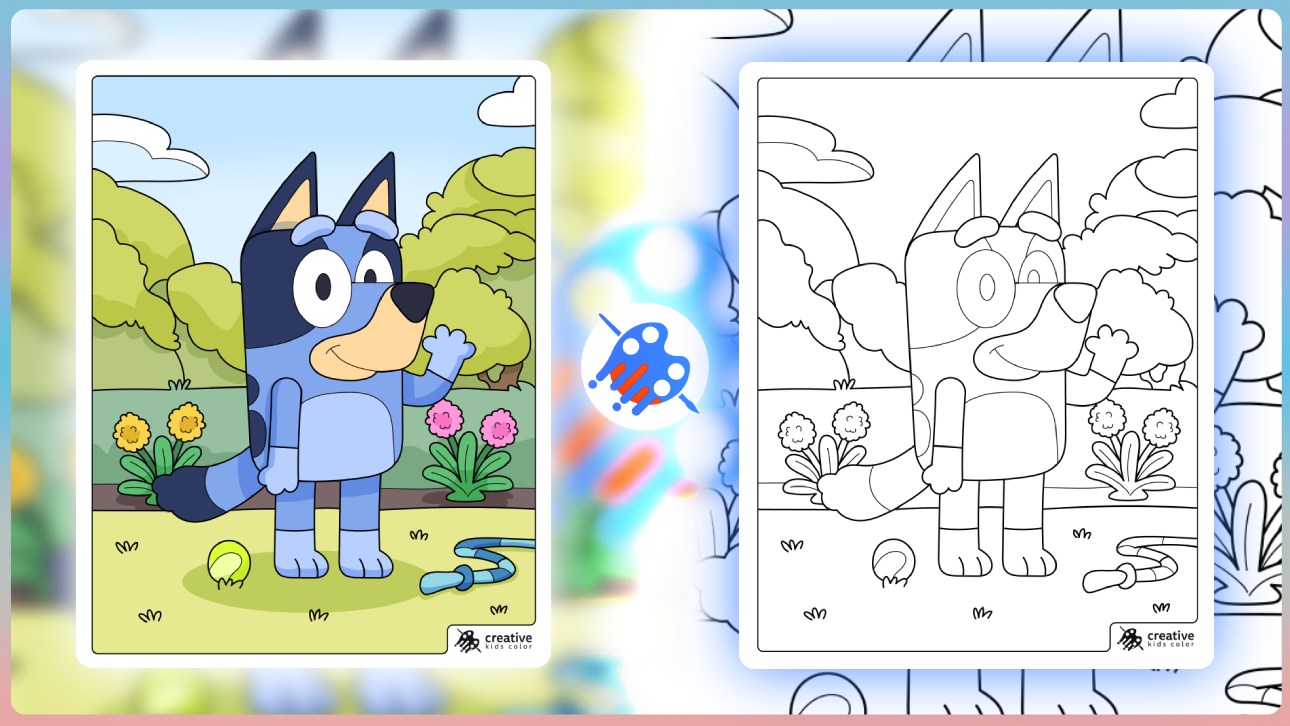
Once Bluey and Bingo have an idea, the Heeler house can become anything. A balloon can start a game of Keepy Uppy, a toy xylophone can freeze Dad in place, and the backyard is always ready to explore! Gather your crayons and get coloring with the Heeler family!
We had the idea to create something that would capture the spirit of an afternoon spent having fun with Bluey and Bingo. So we got to work and created over 60 Bluey coloring pages for kids and adults! With easy designs for kids and more intricate designs for adults, there is something for everyone to enjoy while spending more time with the Heeler family and all the wonderful games they play.
One game with Bluey and Bingo has the potential to bring the whole family and half the street together! Along with Bandit and Chilli, you can find Muffin, Socks, Rusty, Mackenzie, Chloe, Coco, Judo, Winton, and more of your favorite characters in our collection. The Grannies have made an appearance too, so which familiar face will you look out for?
Find your favorite Bluey character and get coloring! Once you have found a design you like, simply click the image or the PDF download button below it to view the file. From there, you can print your chosen design or save it to your computer. All of our free printable Bluey coloring pages are formatted in US Letter size and will print beautifully on A4 paper too!
Free Printable Bluey Coloring Pages
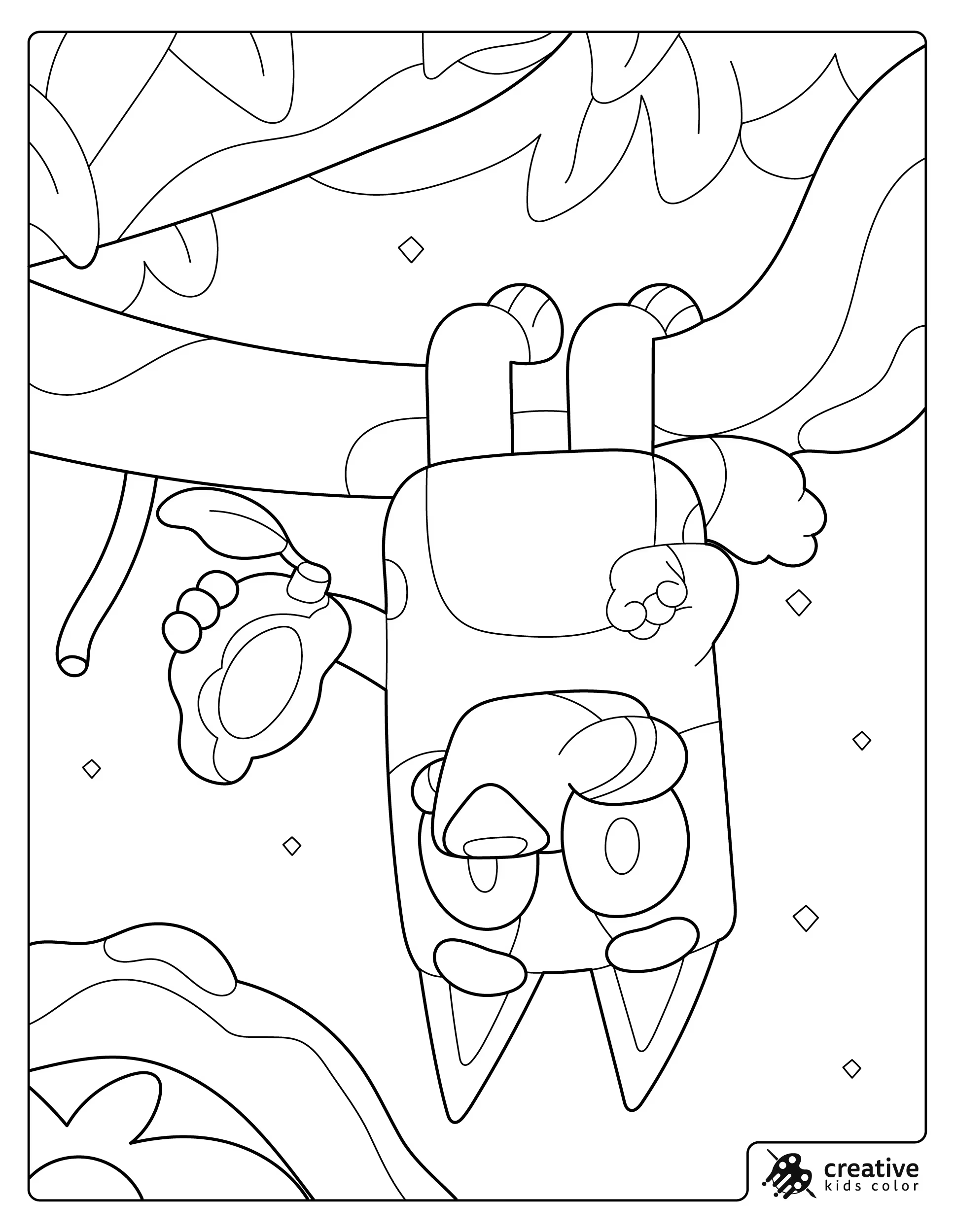
Bluey Hanging from a Tree Branch
Bluey is dangling from a tree branch and has hold of his toy while laughing.
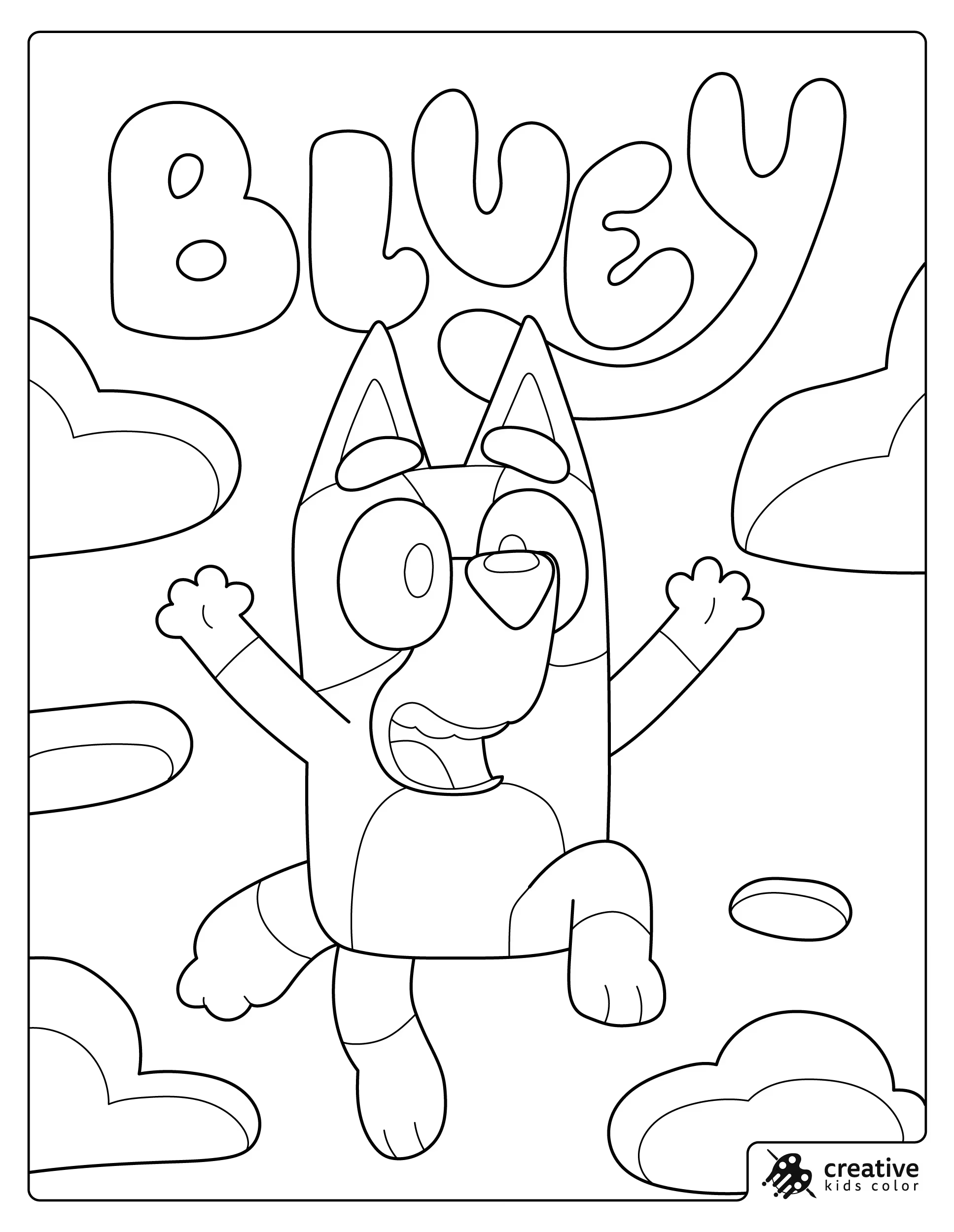
Bluey Jumping Among the Clouds
Bluey is standing in front of clouds with his hands raised up with his name above him.
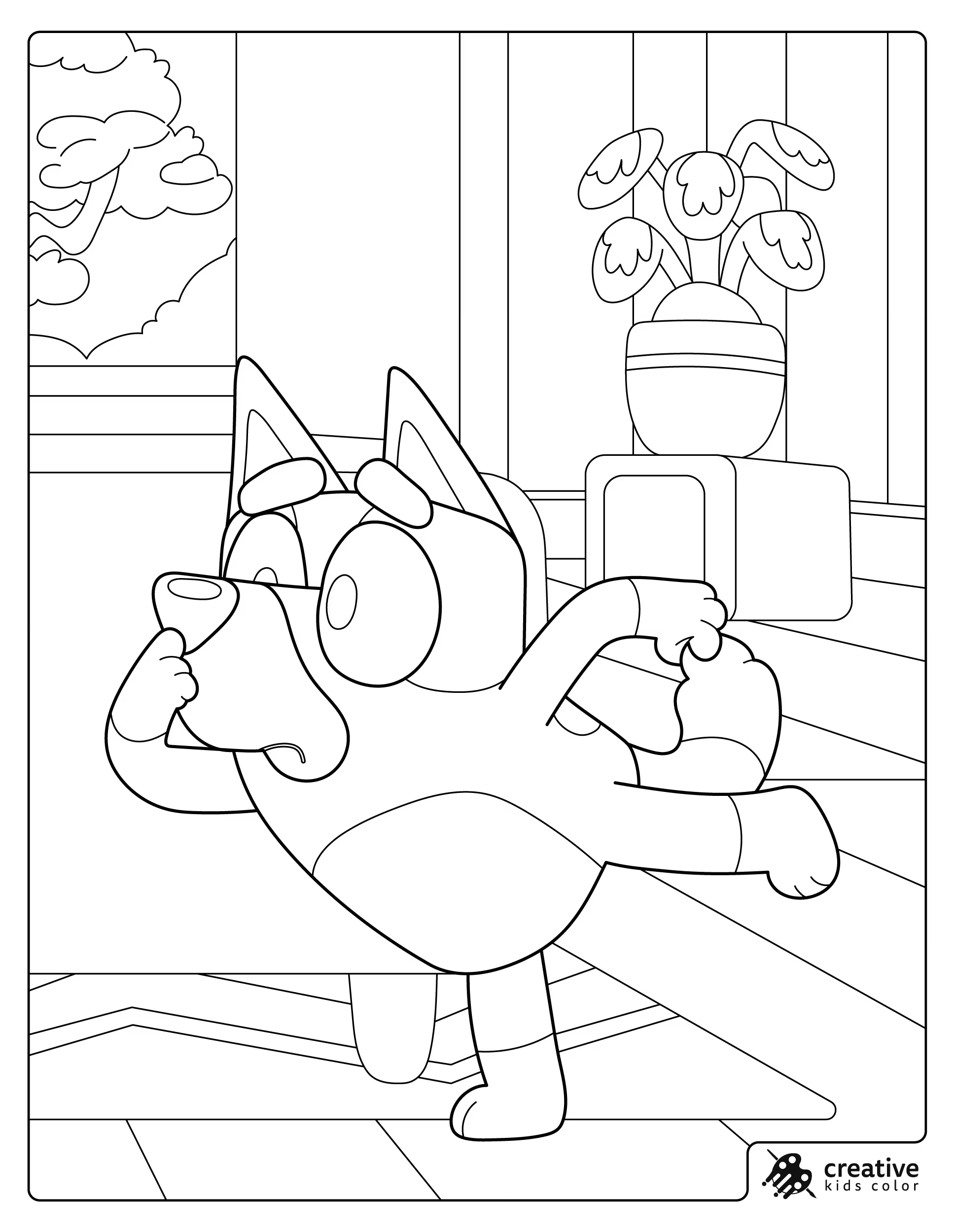
Bluey Balancing on One Paw
Bluey is balancing on one leg indoors while looking forward carefully.
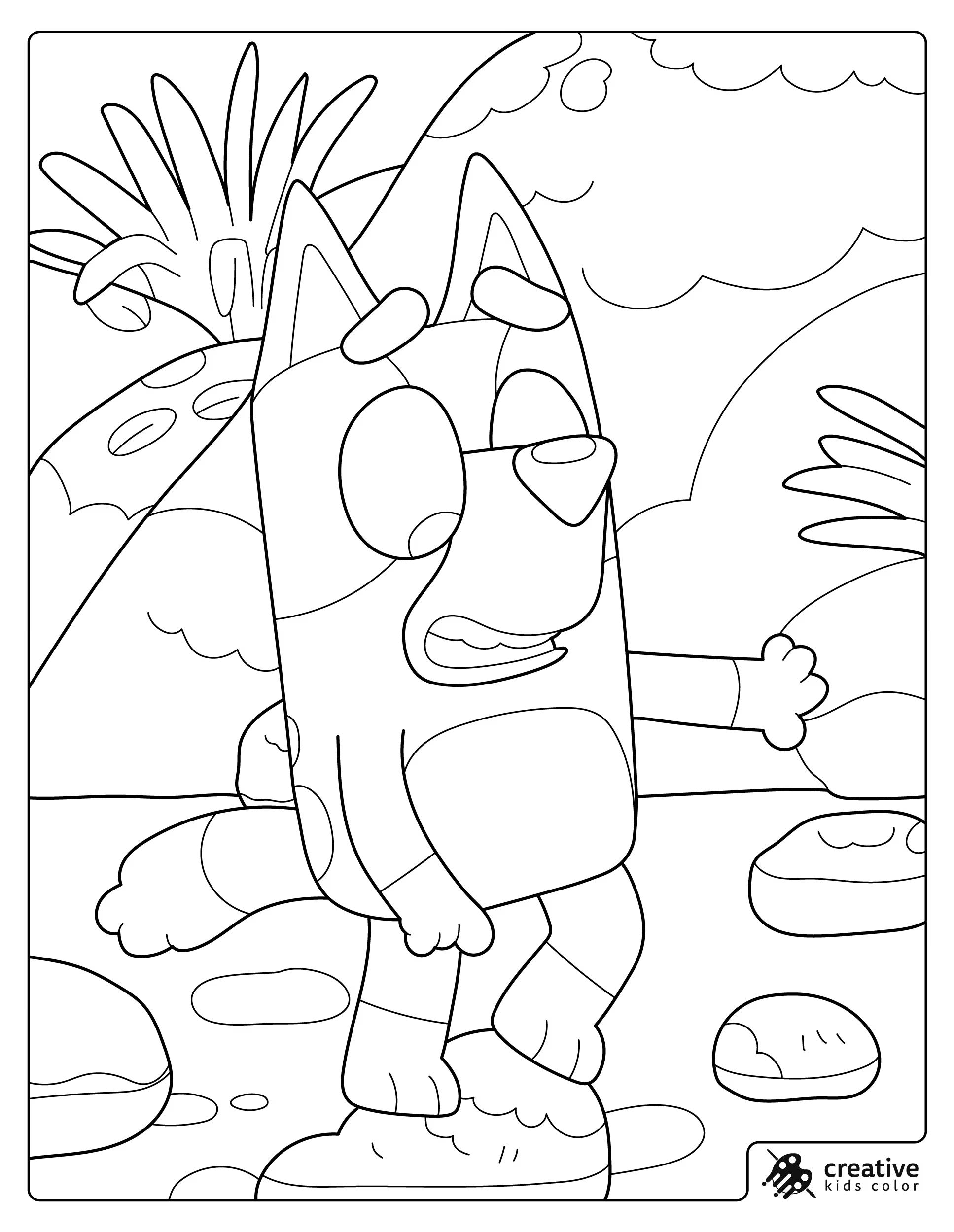
Bluey Stepping on a Stone Path
Bluey is stepping on a rock with a stressed face while bushes and big leaves block his vision.
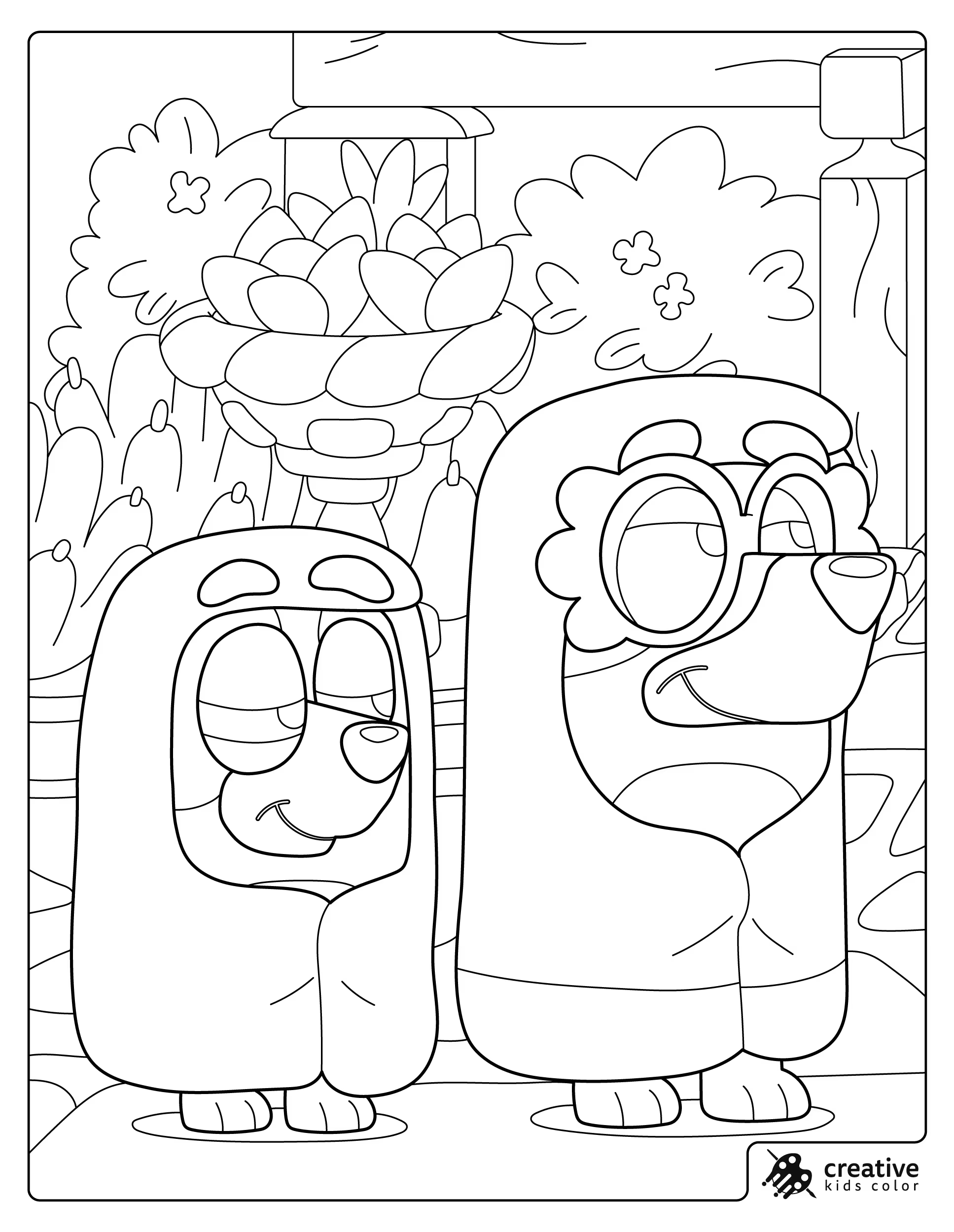
Bluey and Bingo Wrapped in Blankets
Bluey, wearing glasses, is sitting in bed with Bingo wrapped in blankets.
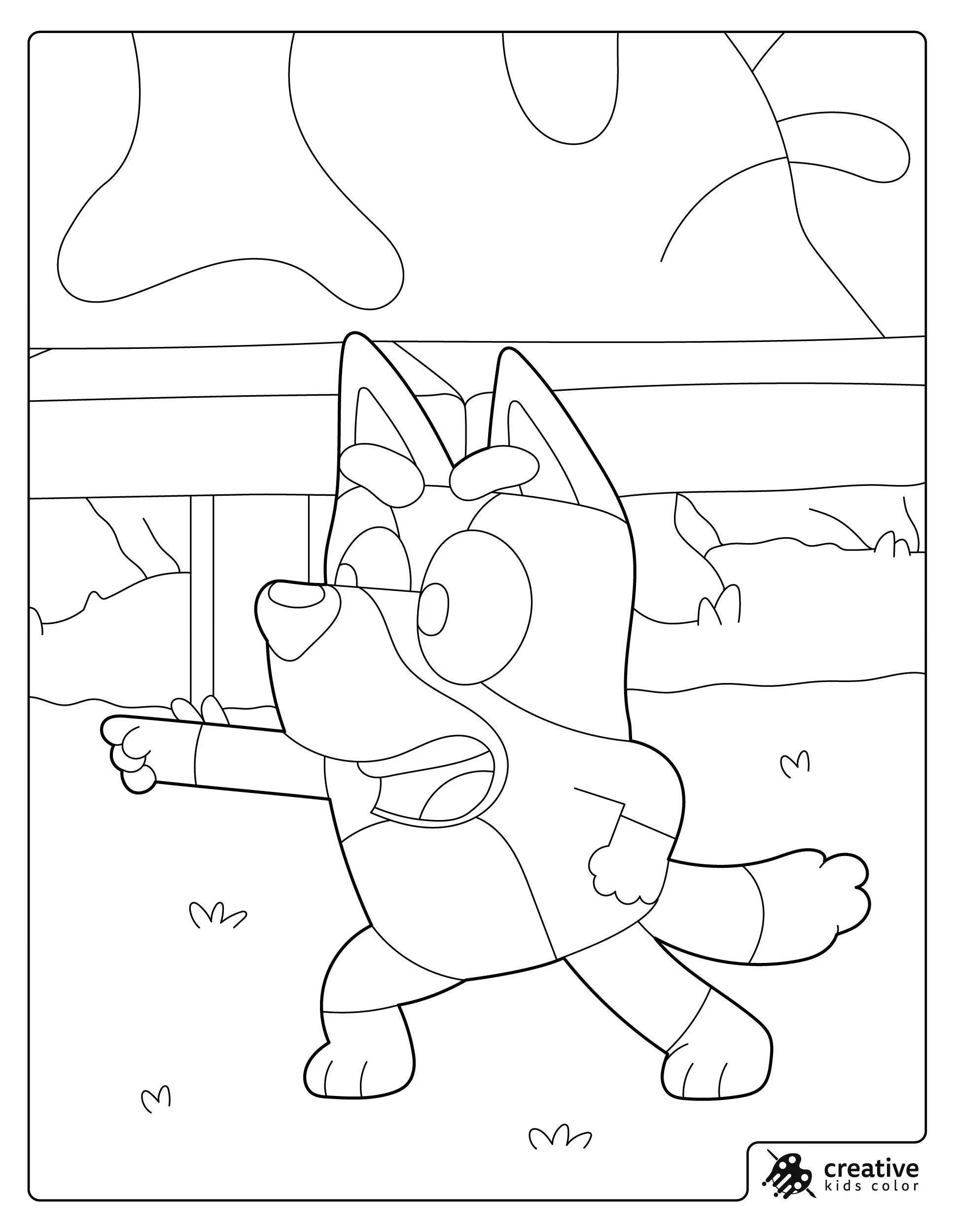
Bluey Exploring the Garden
Bluey is pointing forward excitedly while exploring the garden with lots of trees and shrubs.
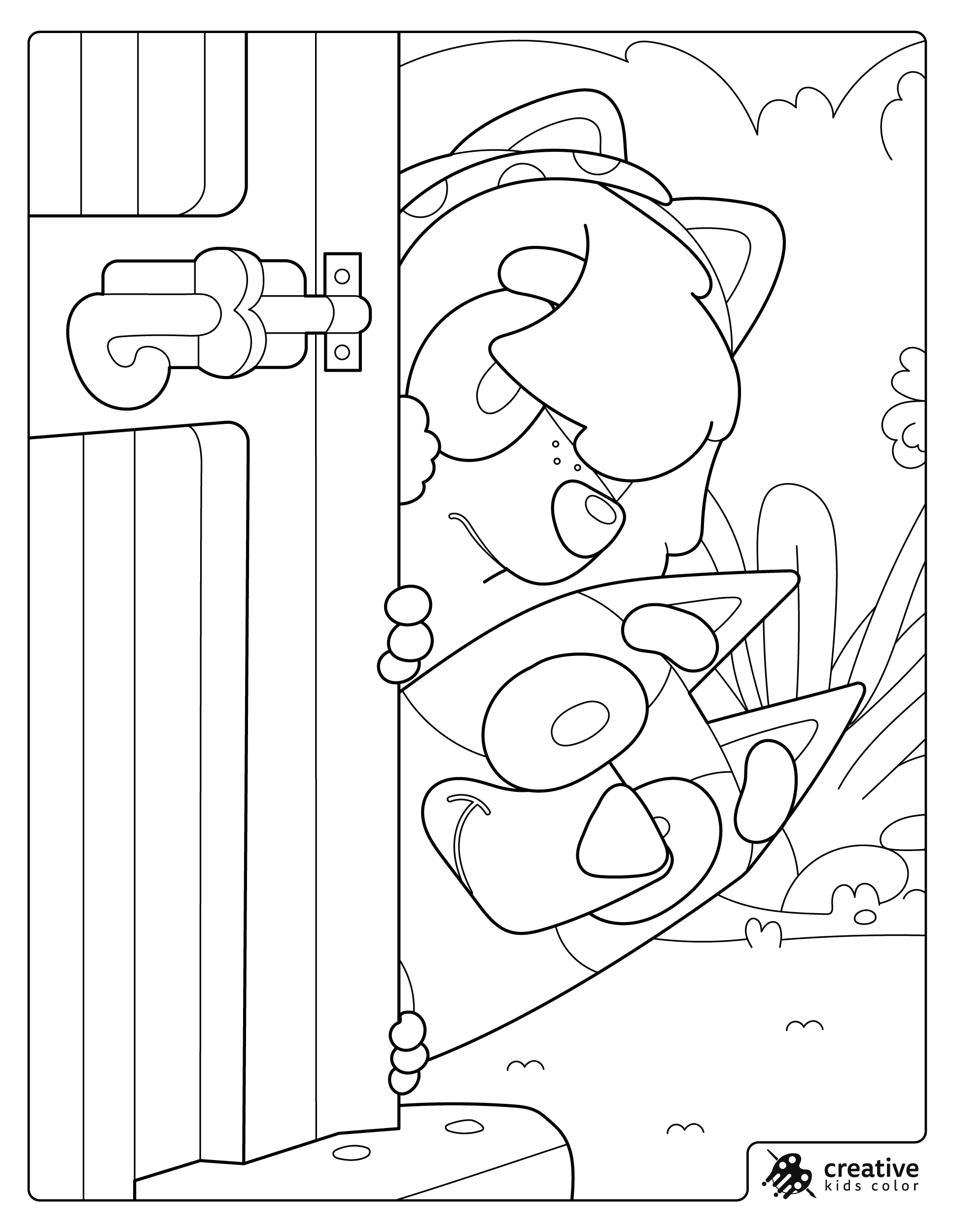
Bluey and Judo Peeking Around the Door
Bluey and Judo are peeking from behind a half door to see what the commotion is about.
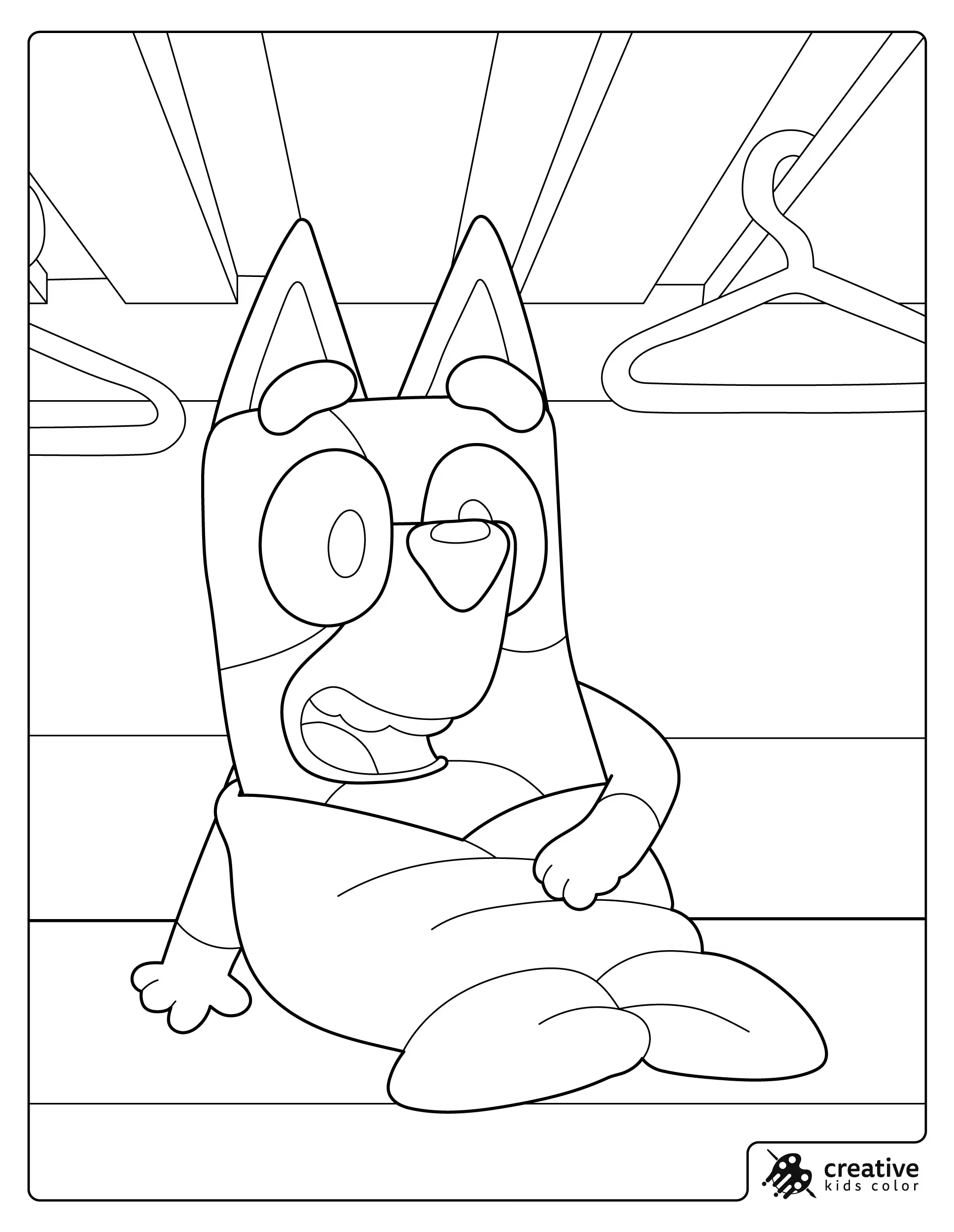
Bluey Sitting Wrapped in a Blanket
Bluey is cozy and wrapped in a warm blanket sitting under the clothesline.

Bluey and Bingo Riding in a Cart
Bluey and Bingo are sitting on a cart in front of a big wooden fence.
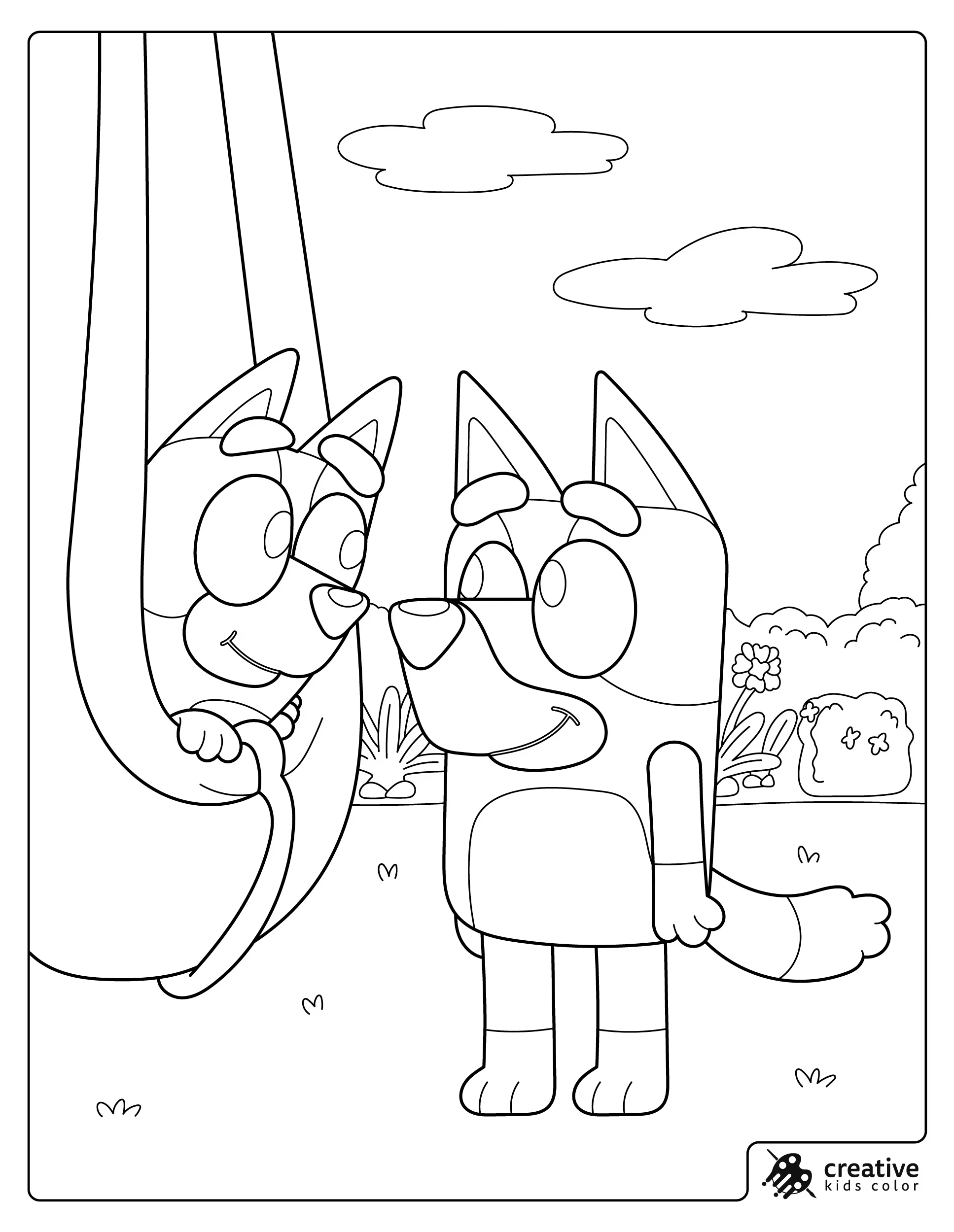
Bluey and Bingo Relaxing in a Hammock
Bingo is laying on a hammock while Bluey is standing next to her enjoying the view.
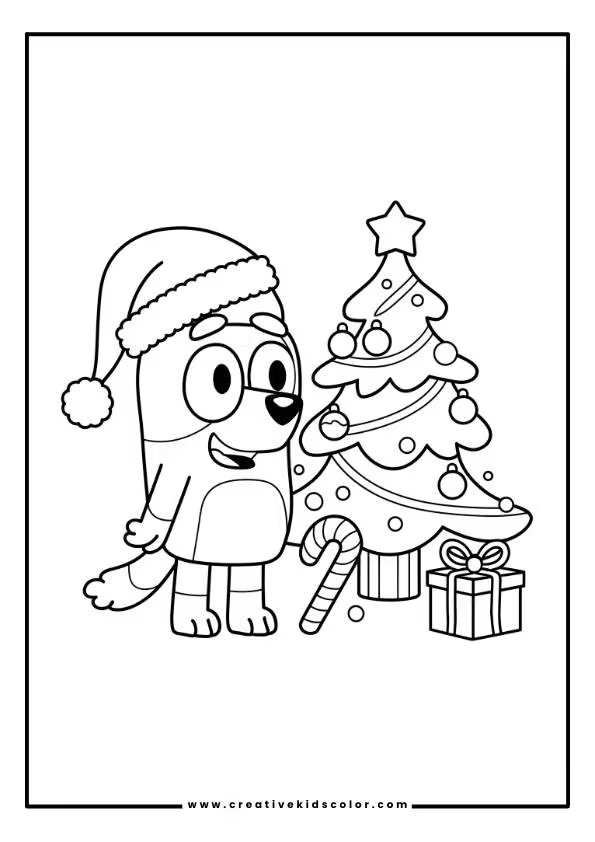
Bluey Christmas Coloring Page
Bluey wearing a Santa cap is standing in front of a decorated Christmas tree.
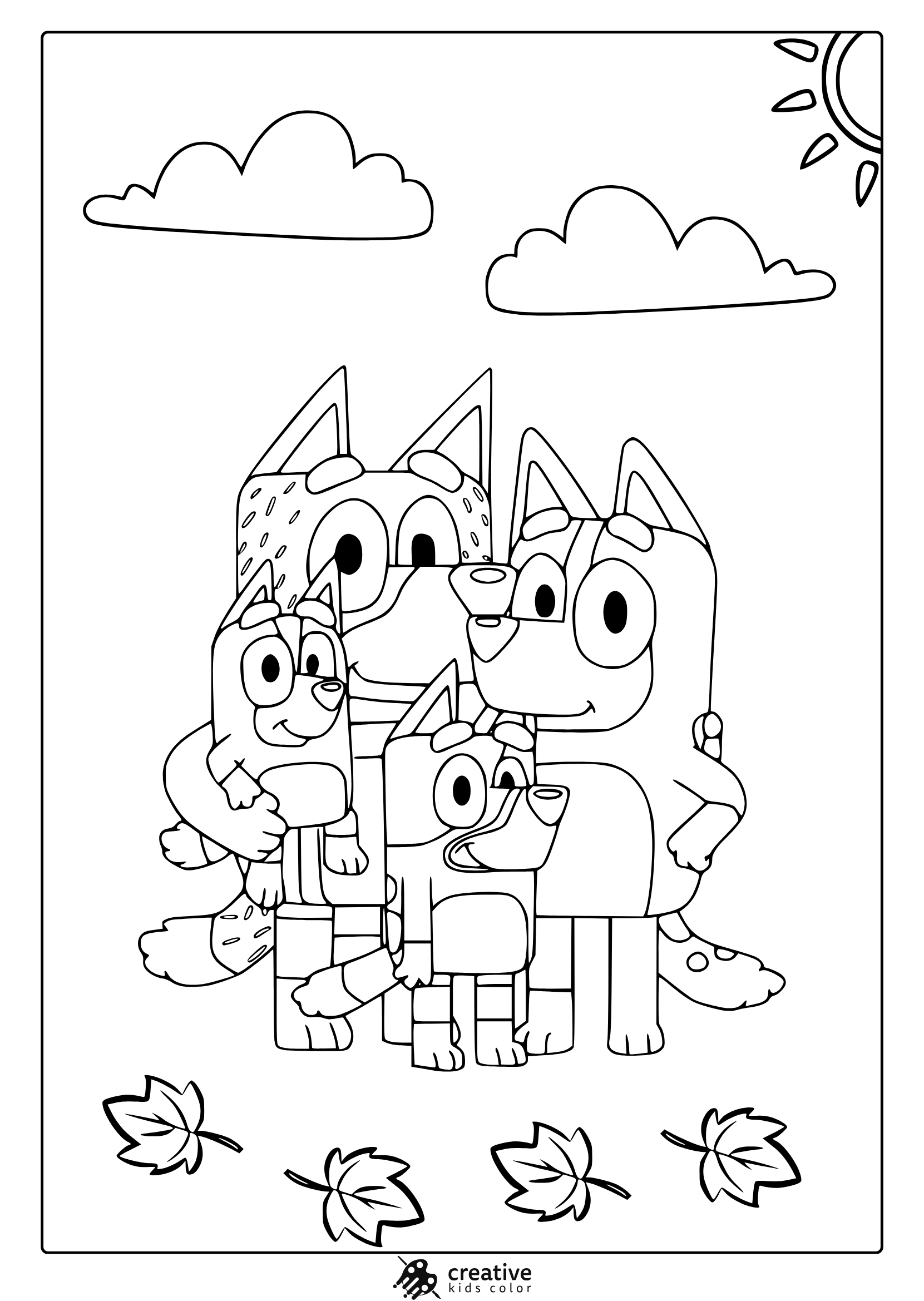
Bluey Family Coloring Page
The Bluey family is waiting for you to color them in with this lovely family portrait.
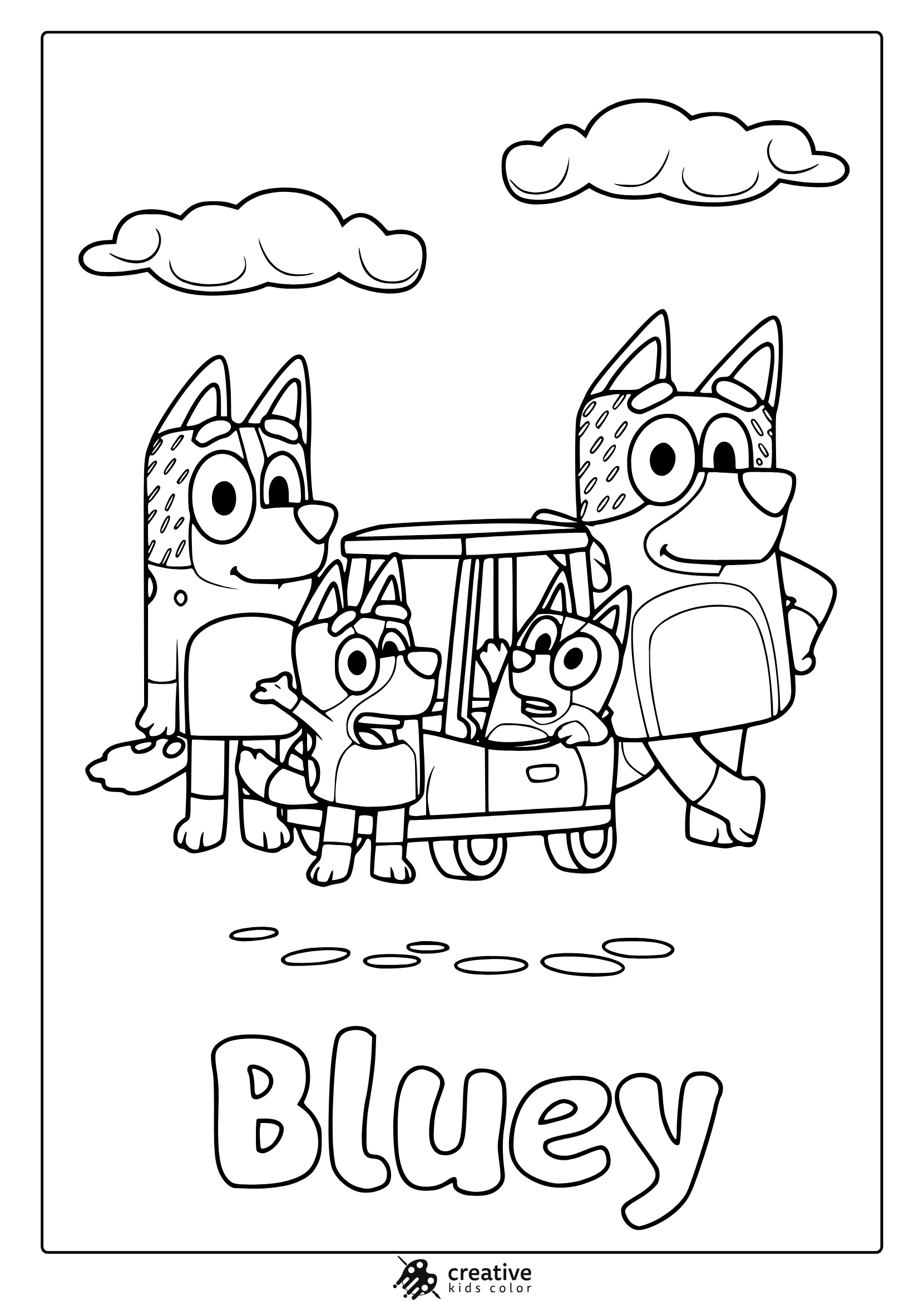
Cute Bluey Family Pose
Beautiful shot of the Bluey family with their car as they prepare to go somewhere fun today.
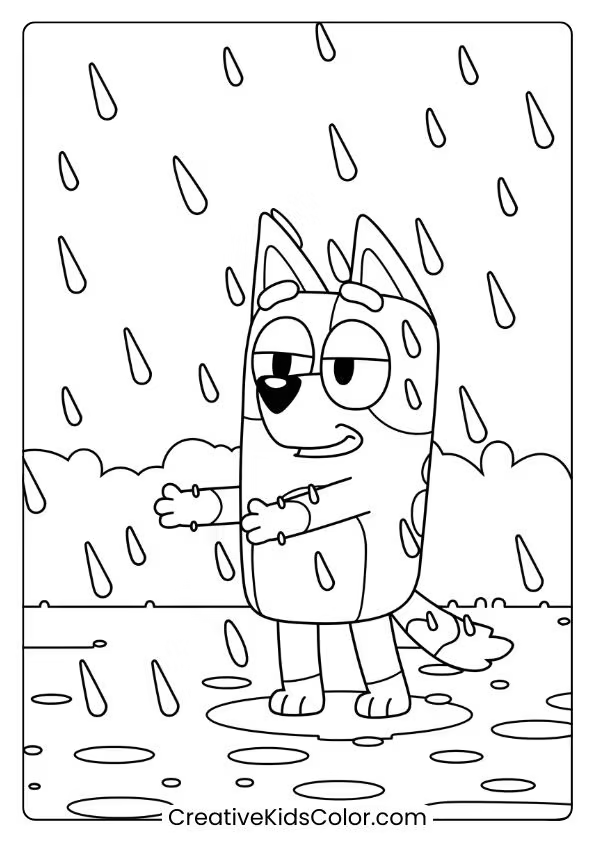
Bluey’s Catching Raindrops
Bluey is catching water droplets on a rainy day with a cheeky grin.
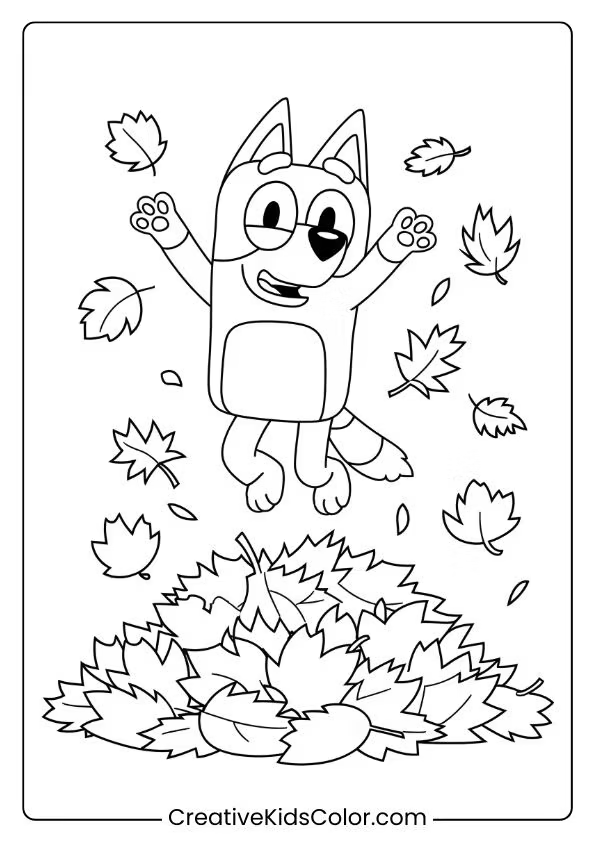
Bluey’s Jumping in Autumn Leaves
Bluey jumps and plays in a field of colorful autumn leaves.
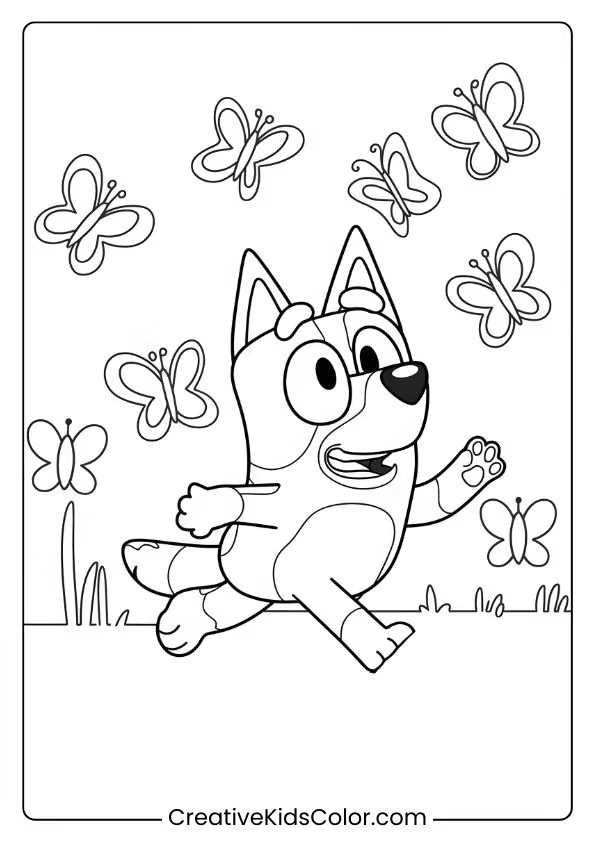
Bluey’s Chase of the Butterflies
Bluey is playing and chasing butterflies happily in the field of flowers with the sun shining.
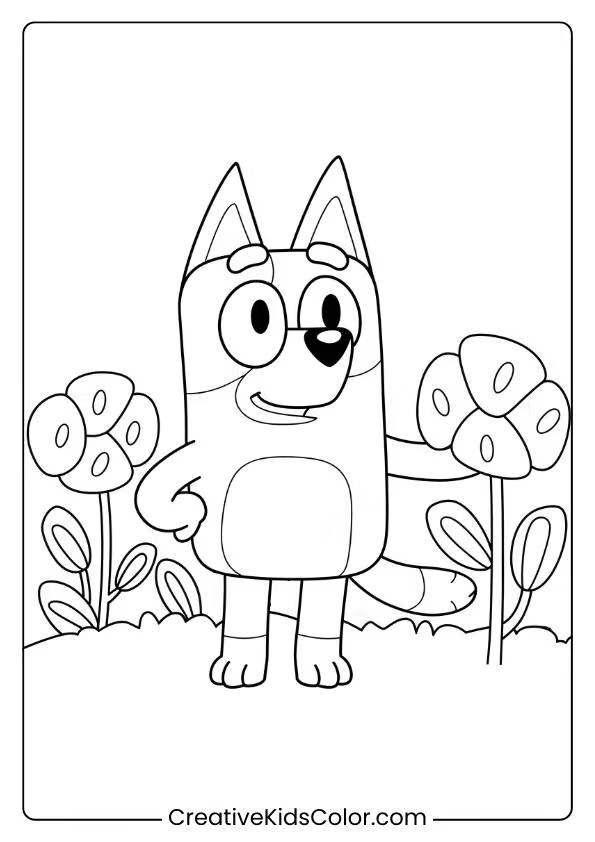
Bluey’s Adventure in the Flower Garden
Bluey looks admiring the flowers in the garden on a sunny day.
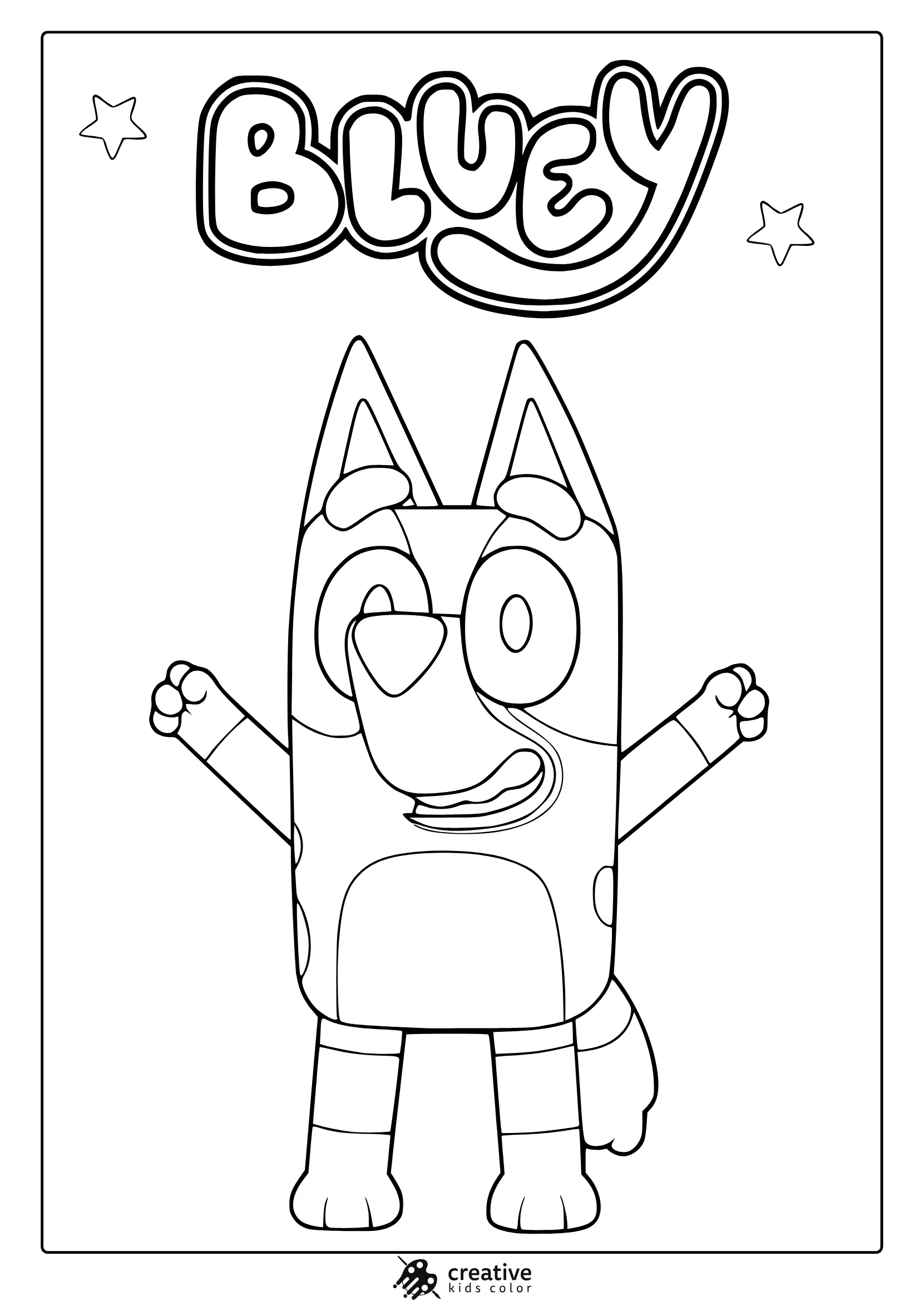
Adorable Bluey Coloring Sheet
Bluey looks so excited in this beautiful design full of cheerfulness and joy.
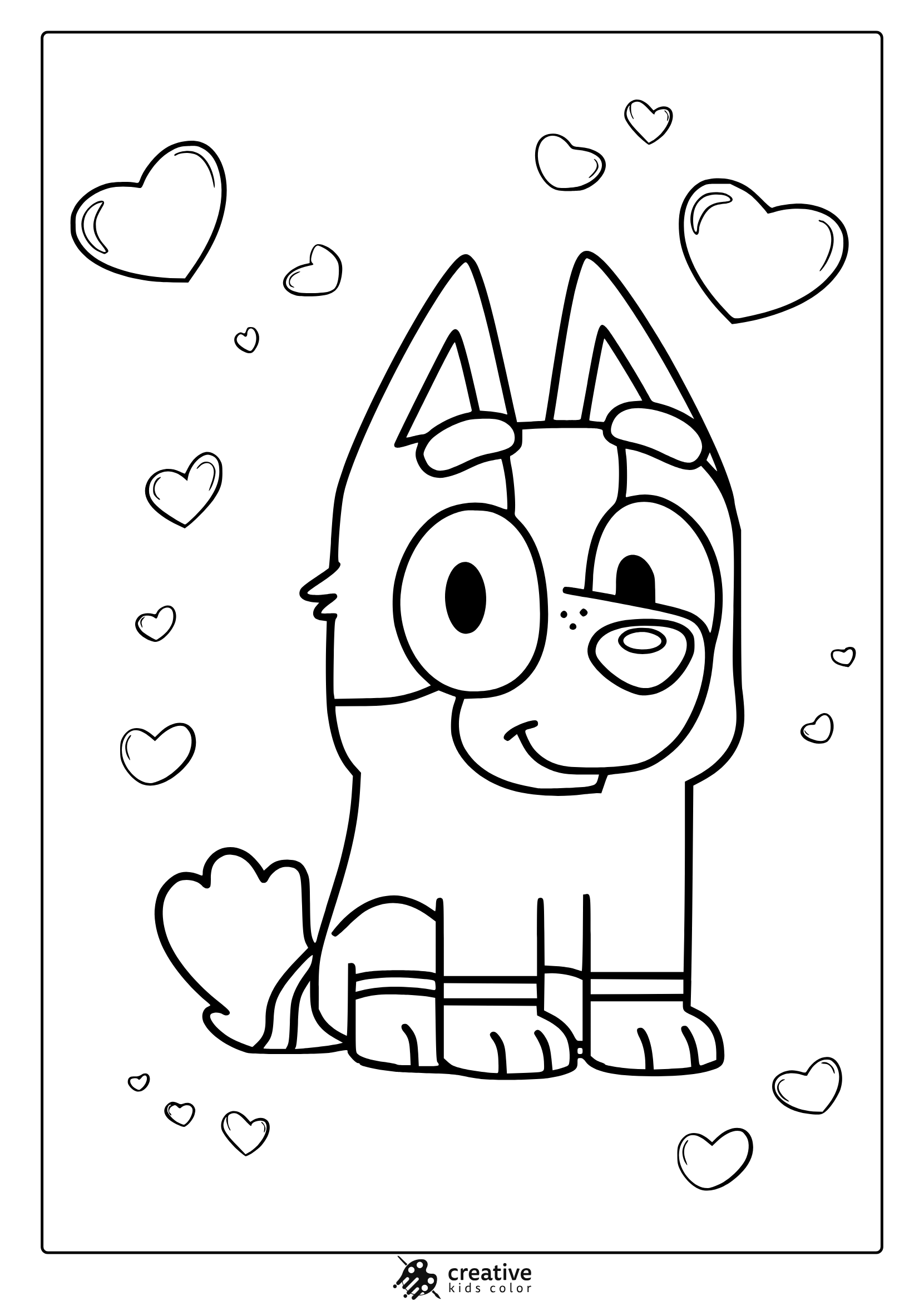
Socks From Bluey Coloring Page
Socks looks so cute and adorable surrounded by hearts. Make him look cuter by filling the colors!
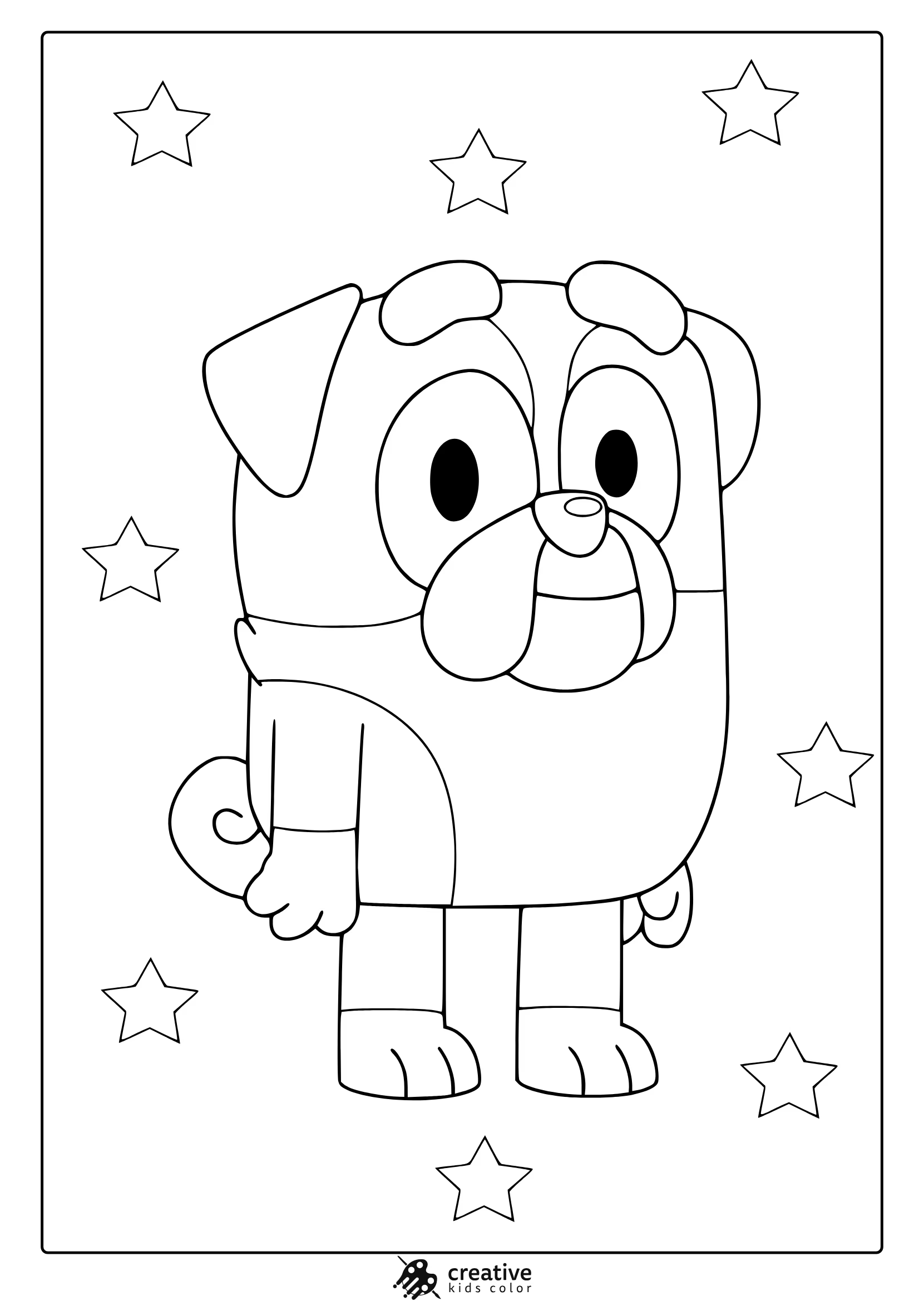
Winton From Bluey Coloring Page
Winton is smiling beautifully surrounded by stars. Now color this lovely pup!
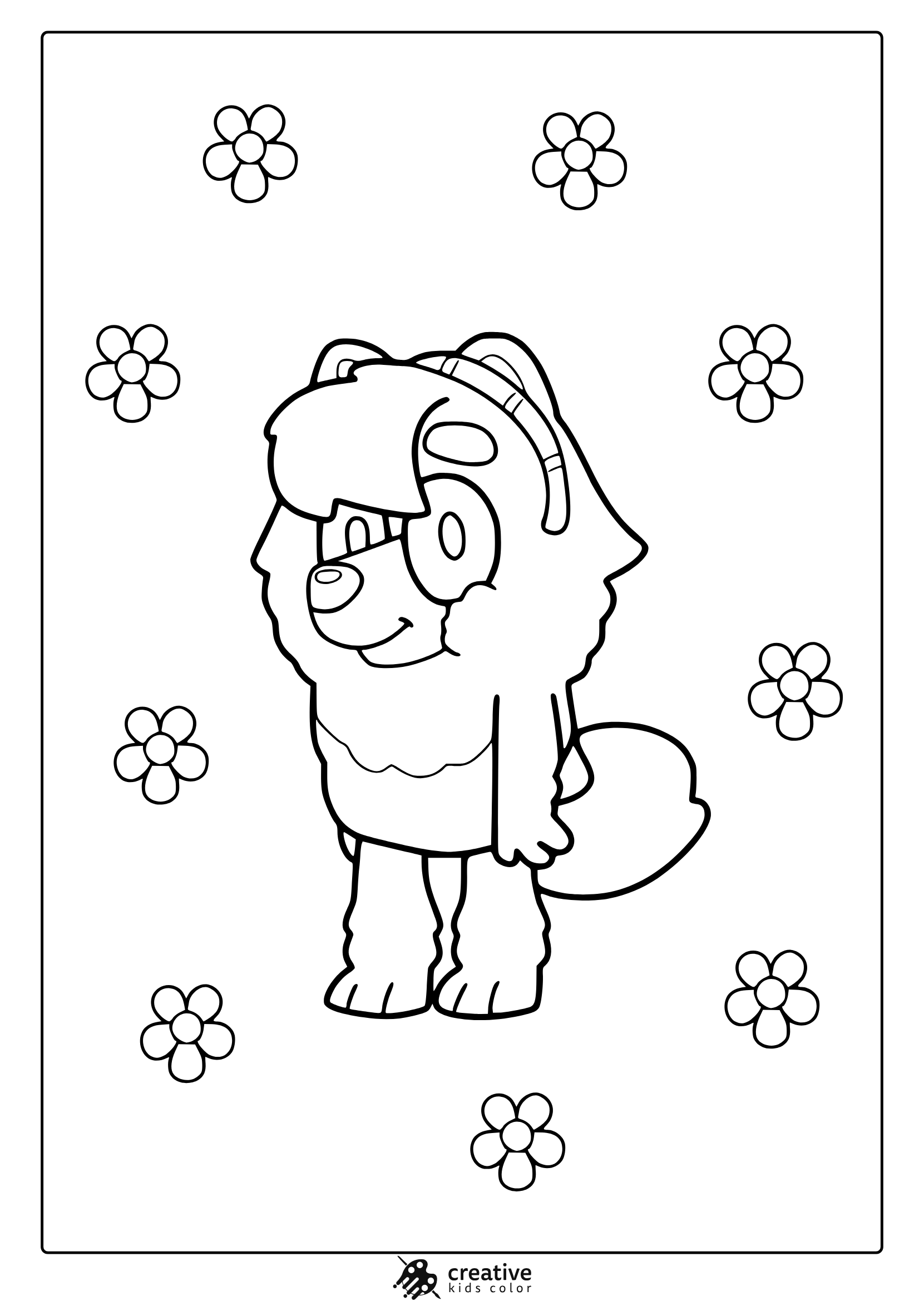
Judo From Bluey Coloring Page
Judo is standing beautifully amidst the flowers looking at us. Time to color this happy dog!
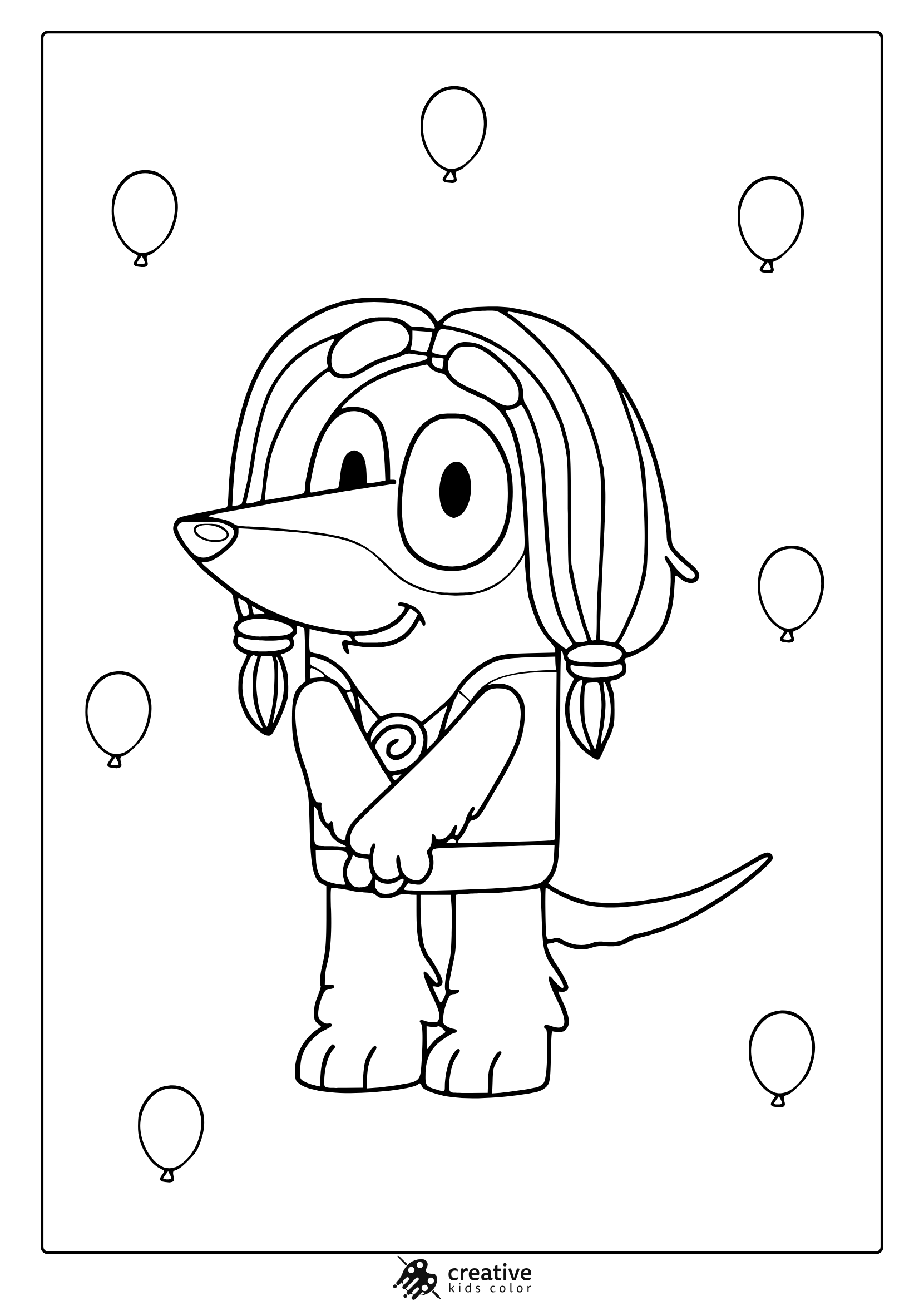
Indy From Bluey Coloring Page
Indy is floating among the balloons with a lovely smile perfect for coloring with bright colors!
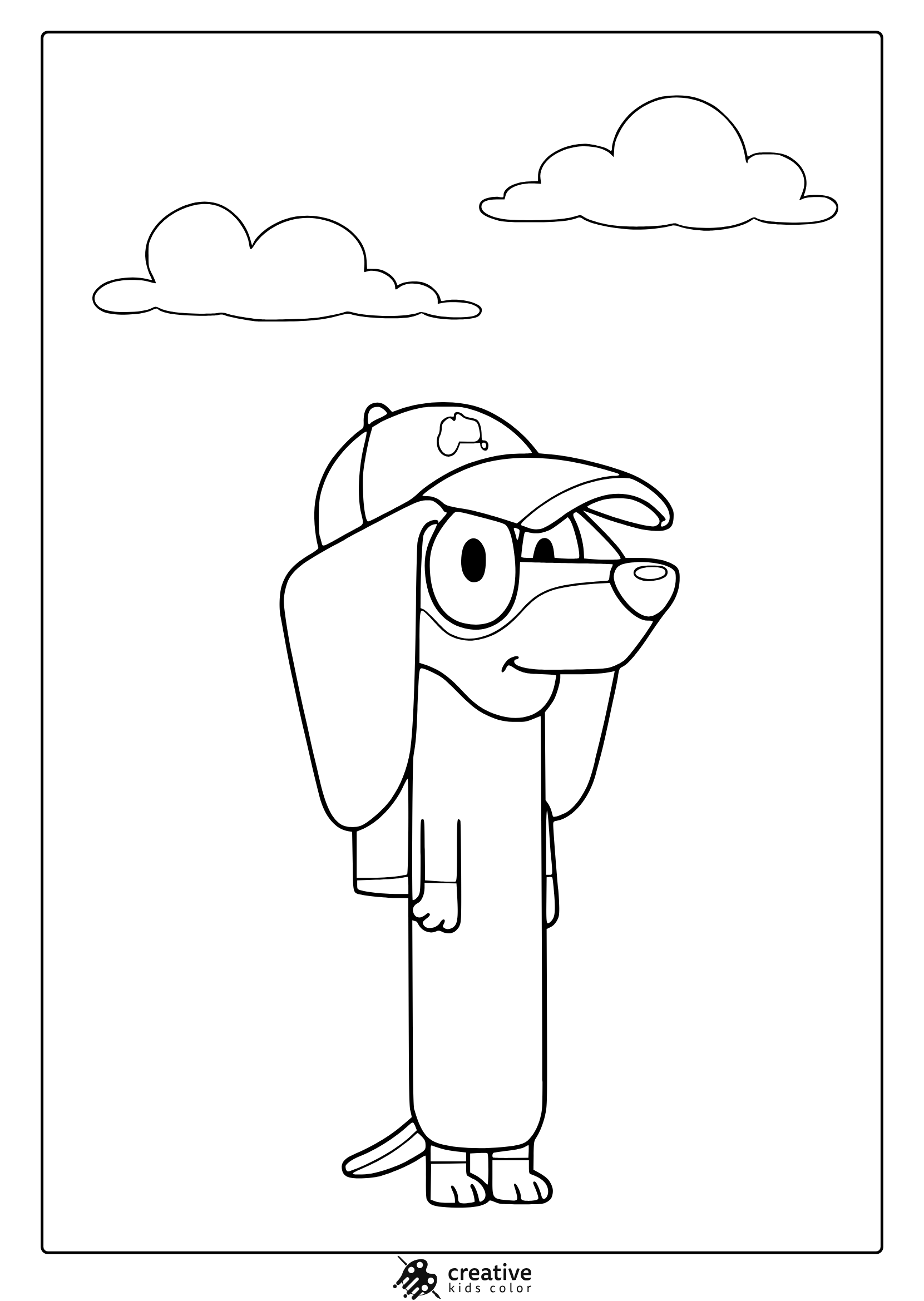
Snickers From Bluey Coloring Page
Snickers looks super cool in a cap and glasses! Complete the look by filling the colors!
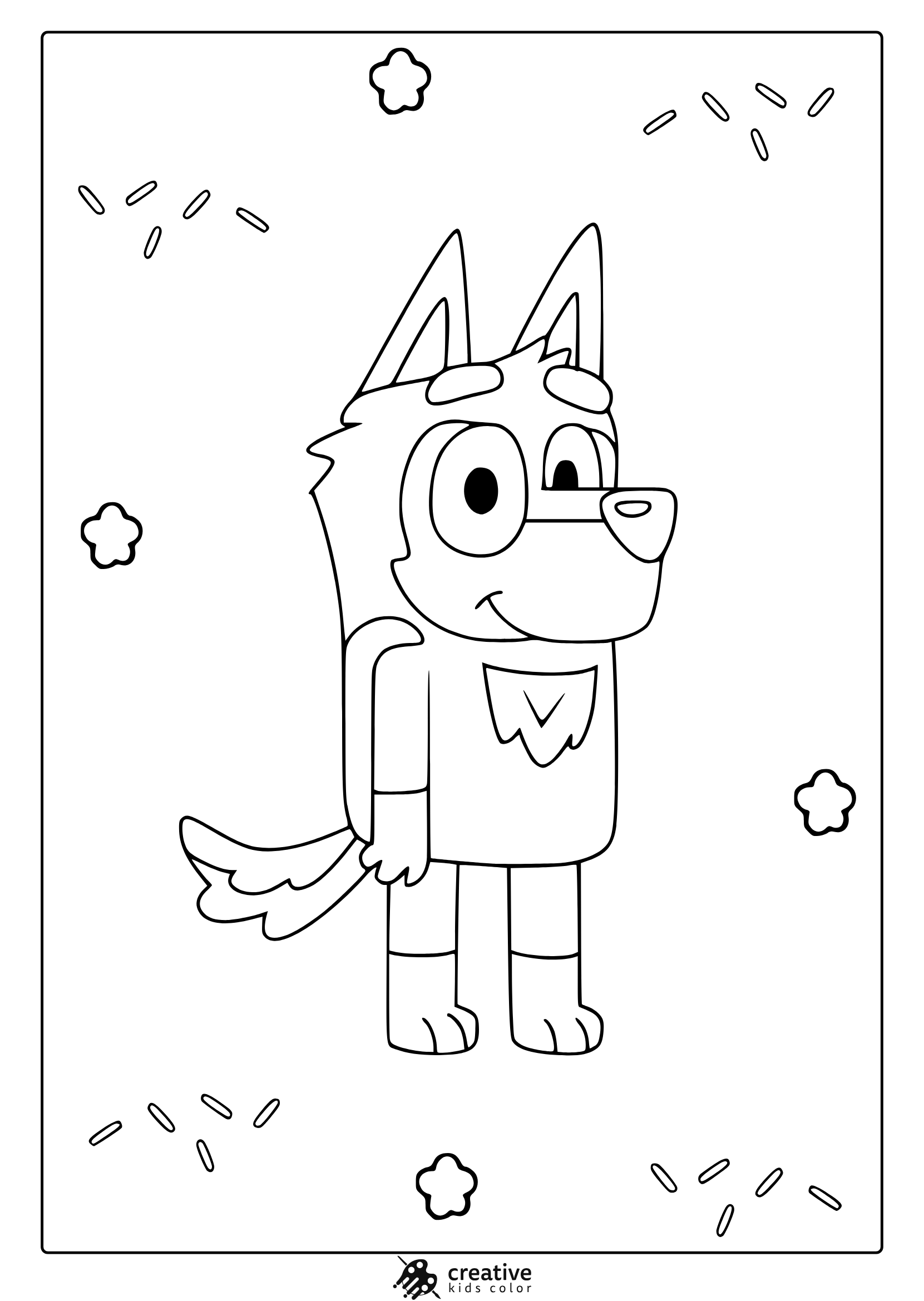
Gruber From Bluey Coloring Page
Gruber’s happy face and fluffy tail is waiting for you to color with your favorite hues.
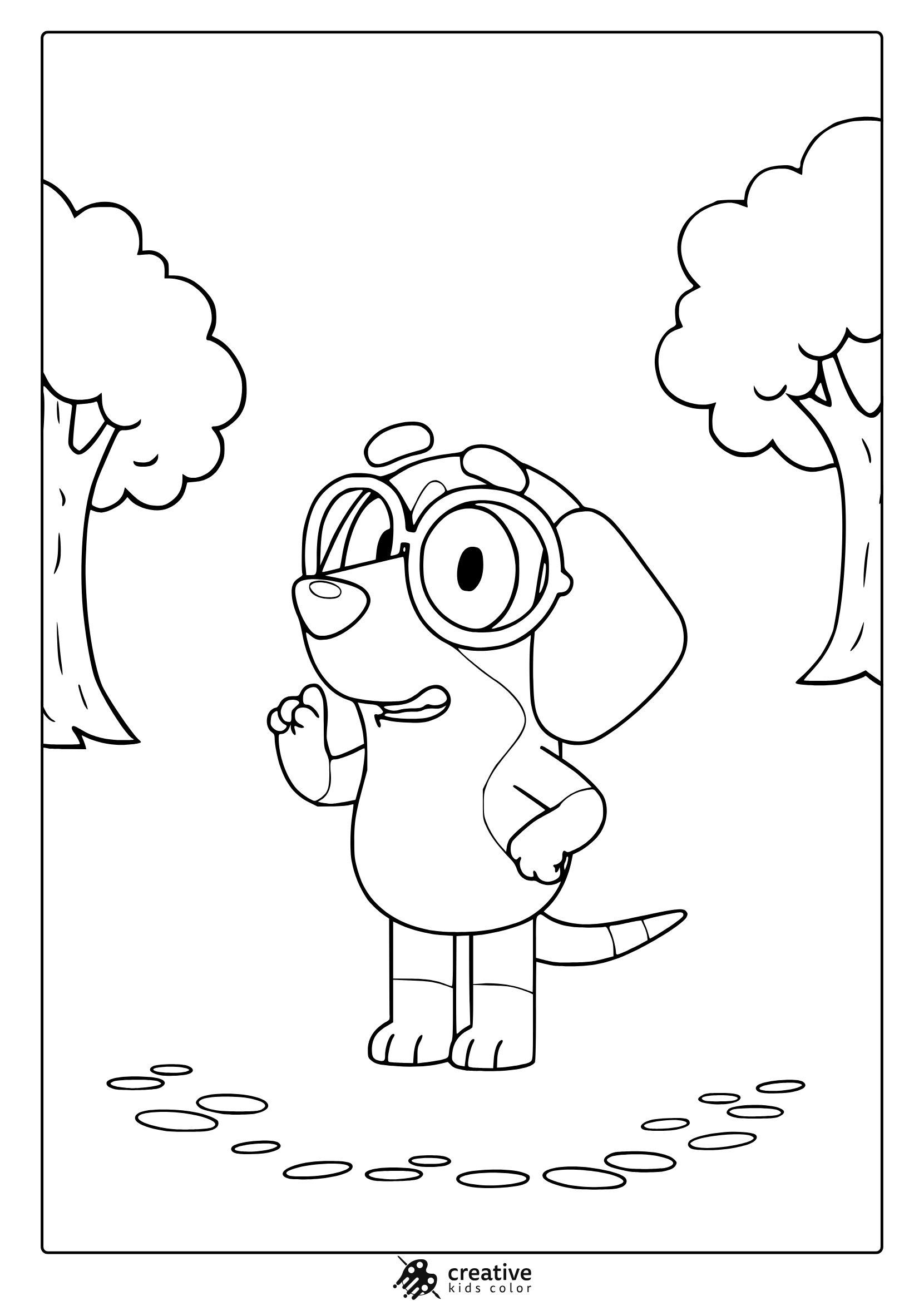
Honey From Bluey Coloring Page
Honey looks curious and calm amidst the trees. Come on, color her world!
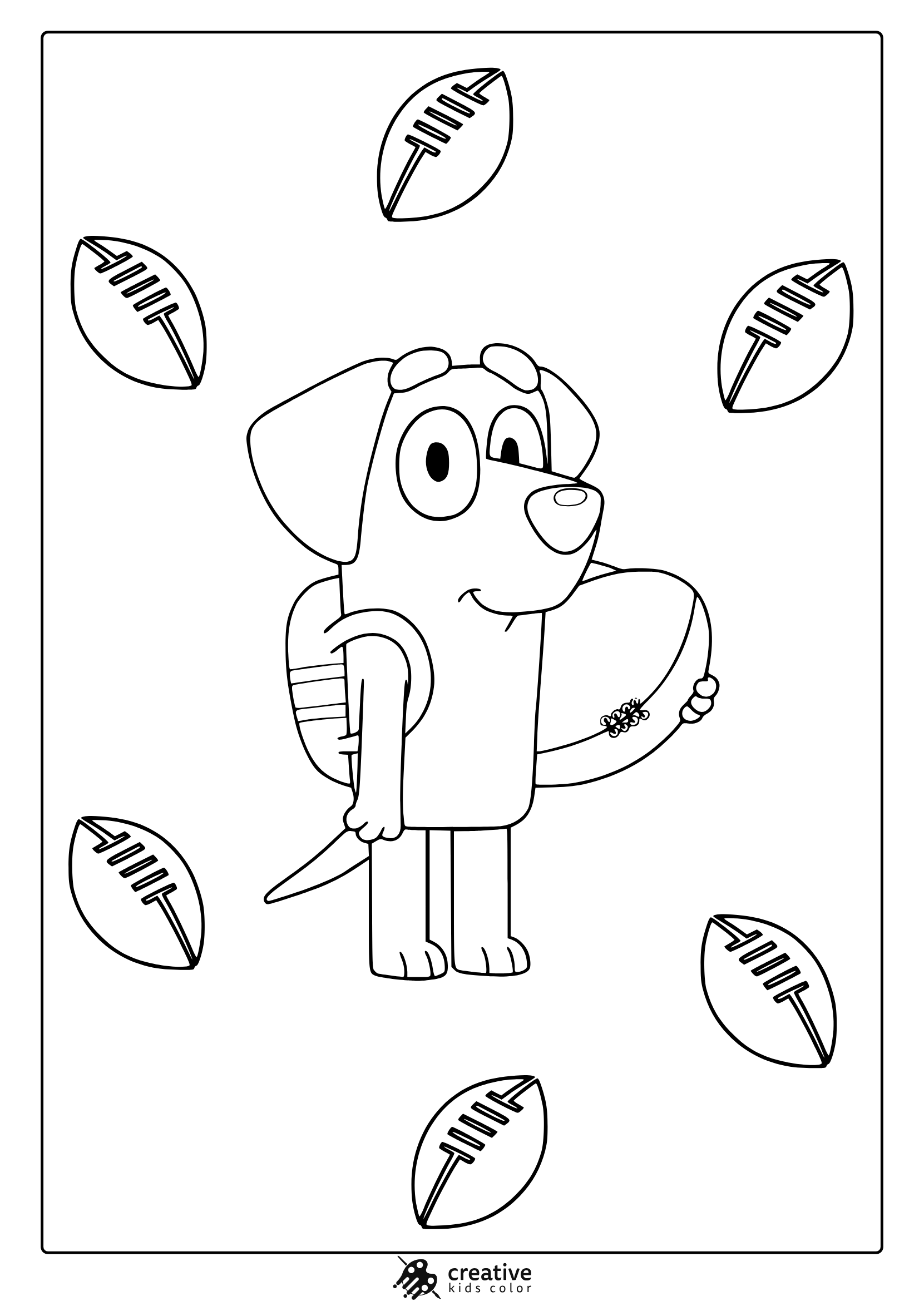
Lucky From Bluey Coloring Page
Lucky loves football! Now bring out the colors and fill this energetic sportsman!
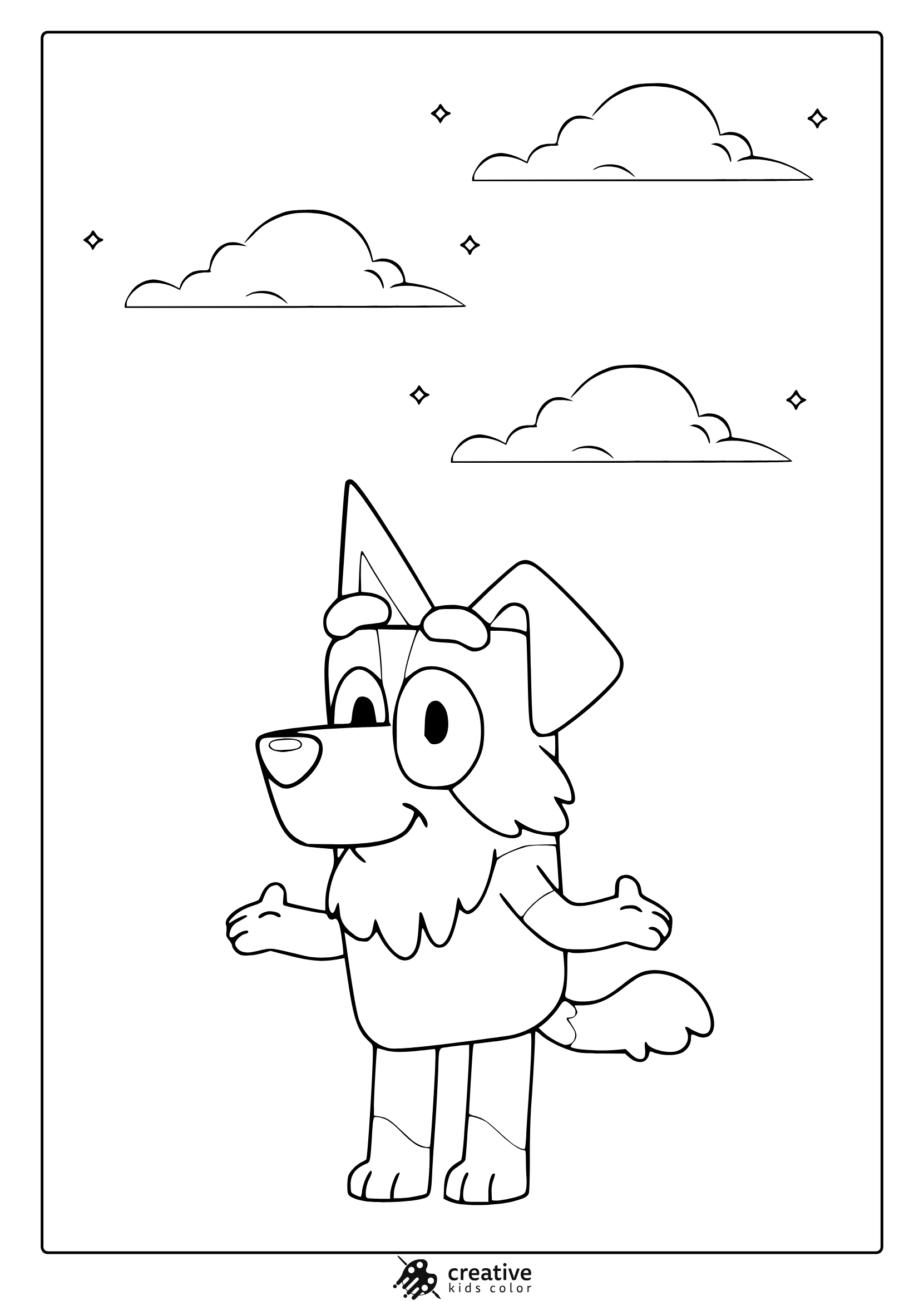
Mackenzie From Bluey Coloring Page
Mackenzie is bursting with joy under the beautiful sky get coloring!
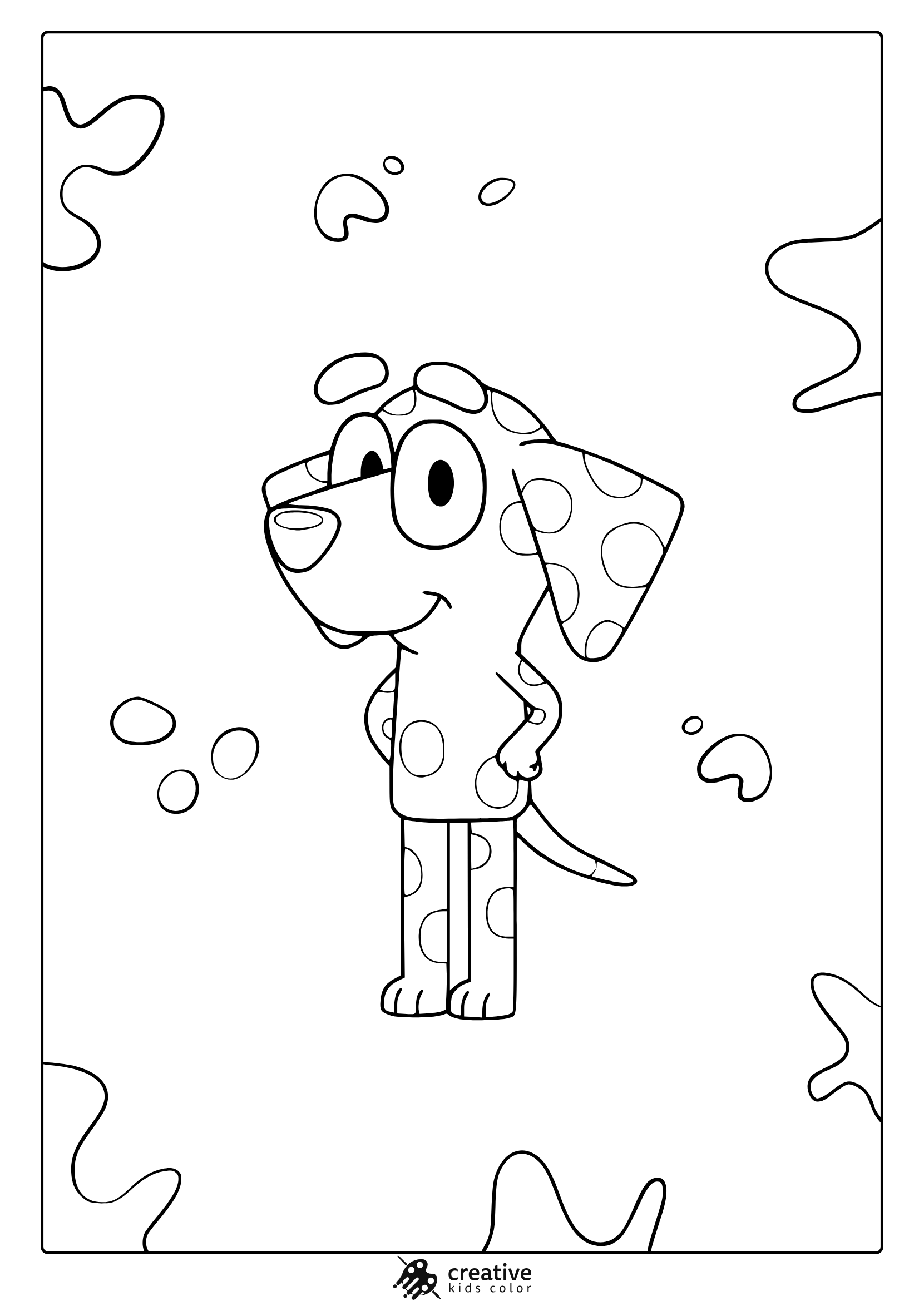
Chloe From Bluey Coloring Page
Chloe looks stunning in her spotted outfit and pose. Now fill it with vibrant colors!
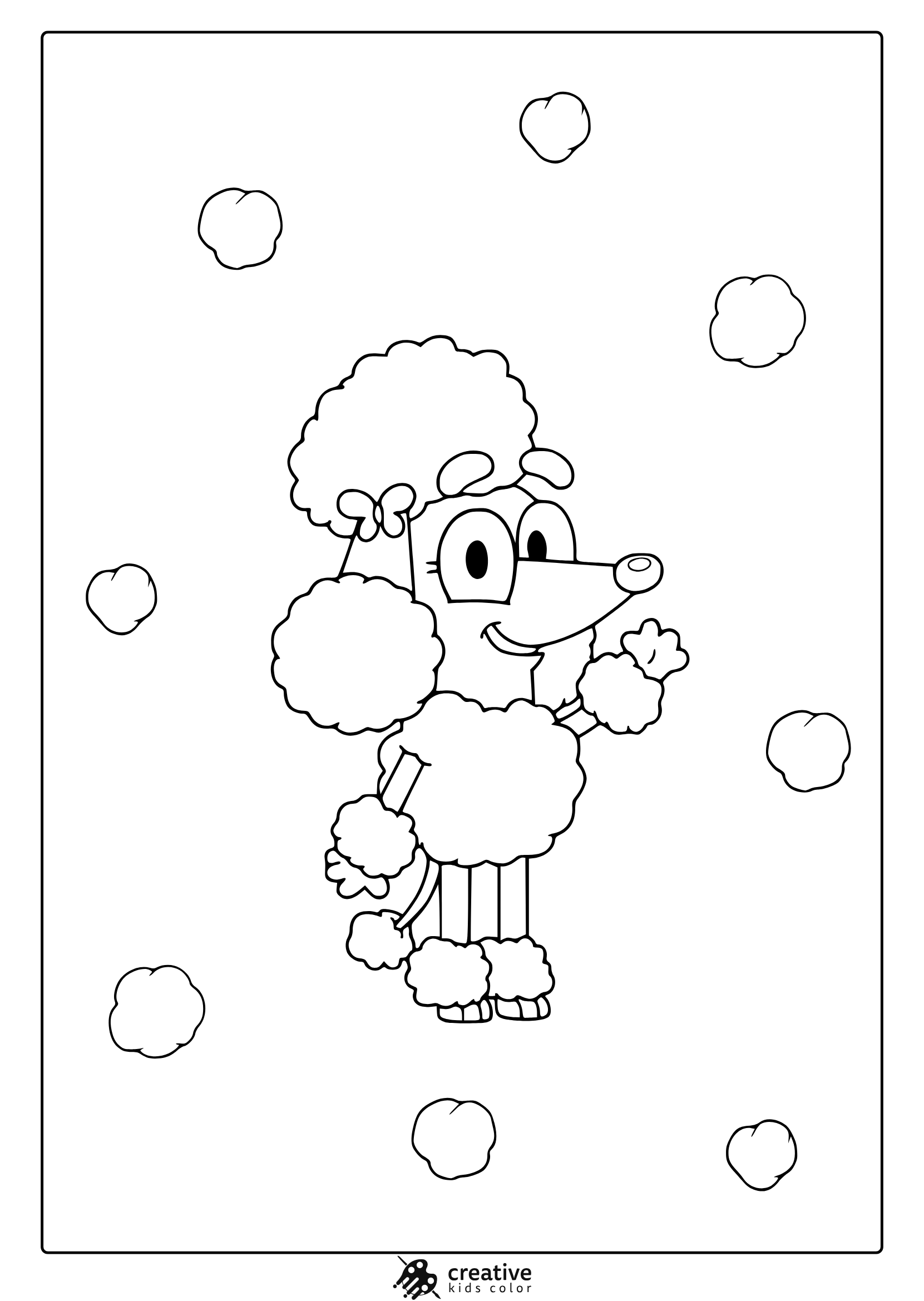
Coco From Bluey Coloring Page
Coco’s curly hair and lovely smile are perfect for coloring magic!
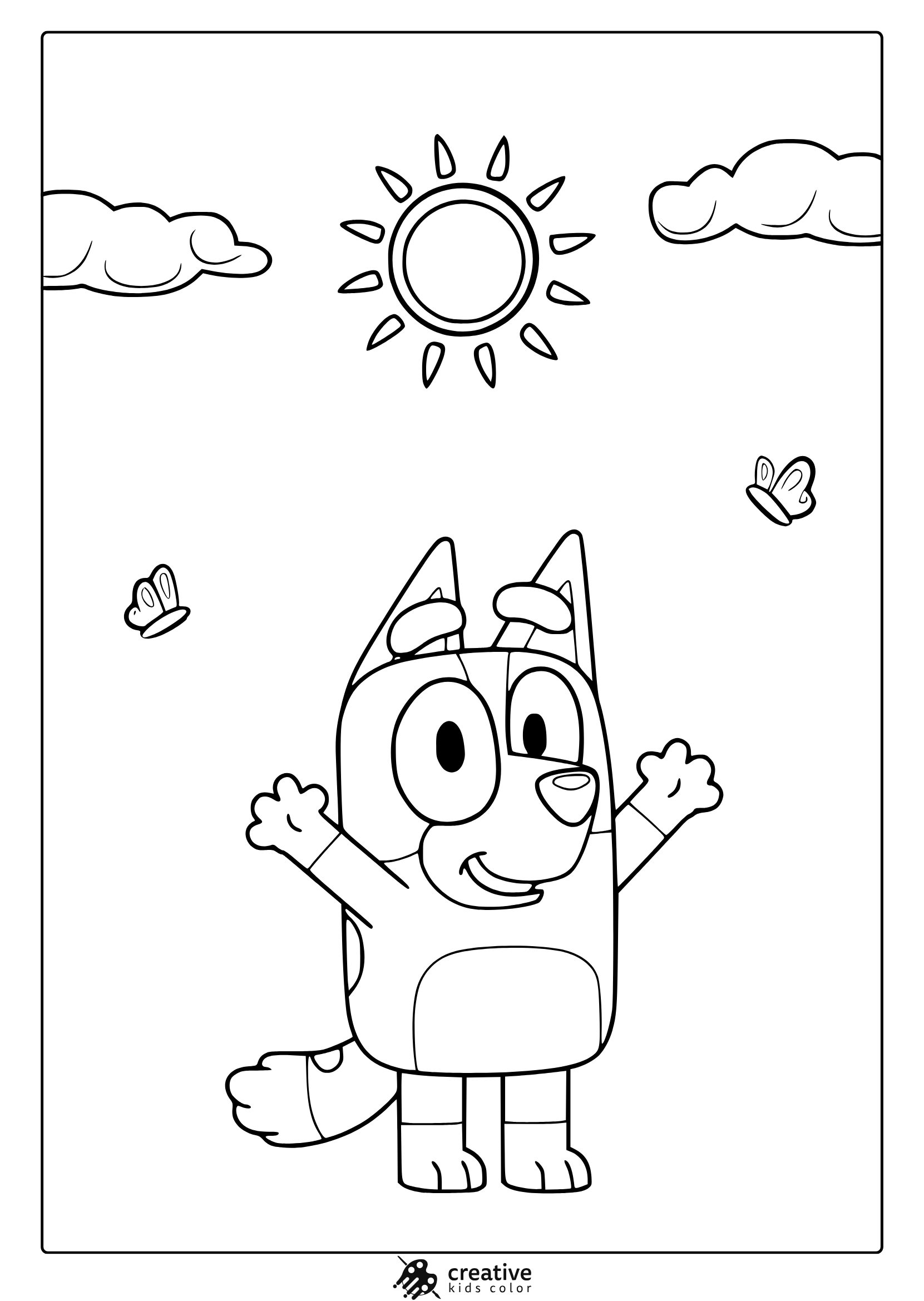
Bingo From Bluey Coloring Page
Bingo’s cheerful jumping and bright blue sky will inspire you to color this one!
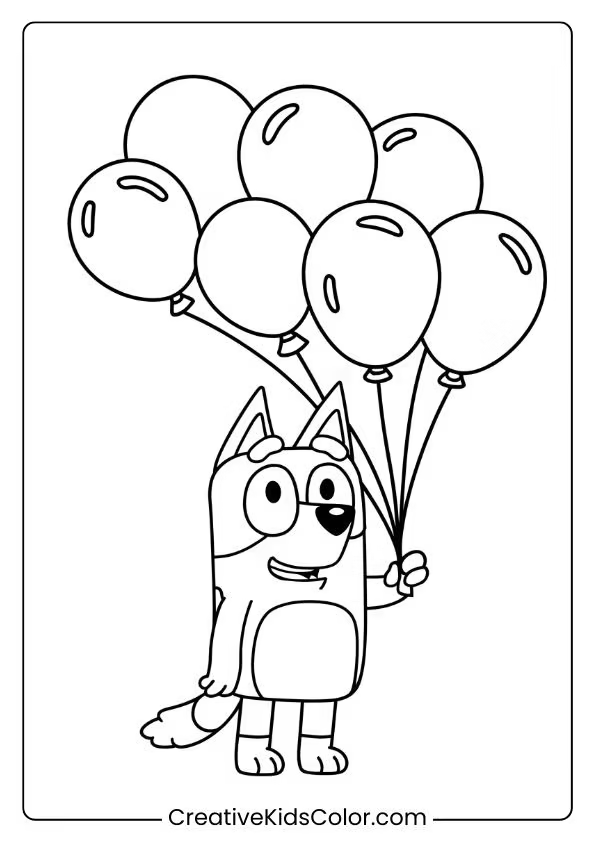
Bluey with Balloons
Bluey holds on to colorful balloons with excitement.
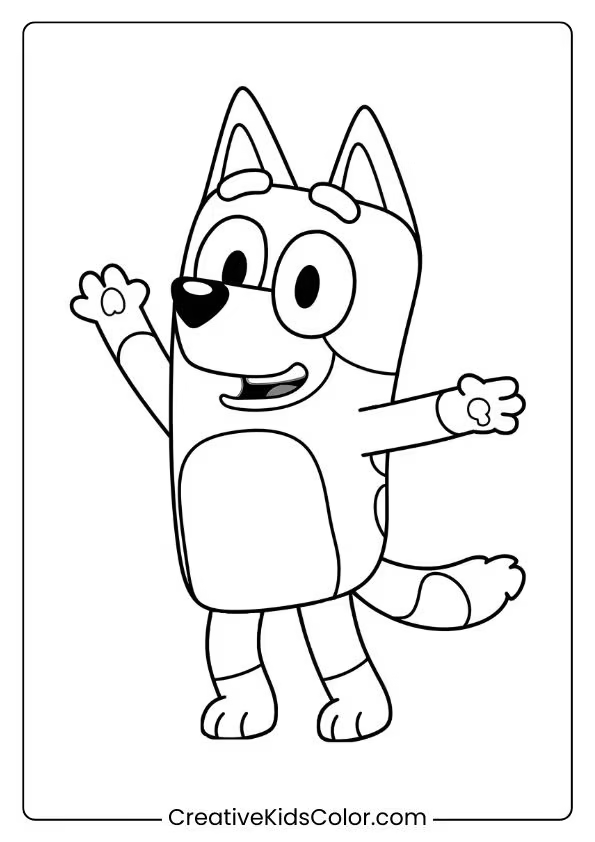
Bluey’s Dancing
Bluey jumps and dances happily with excitement.
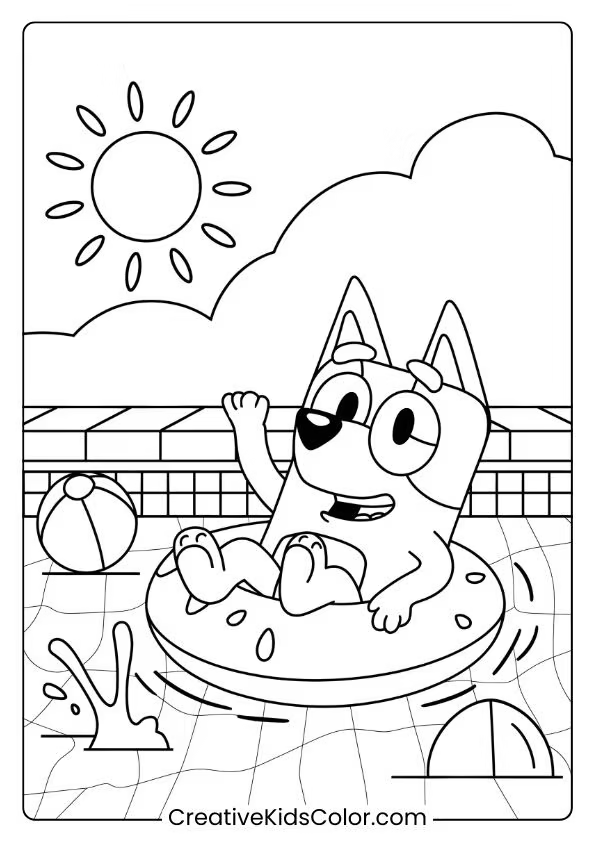
Bluey’s Summer Pool Day
Bluey floats joyfully on an inflatable ring in the pool.
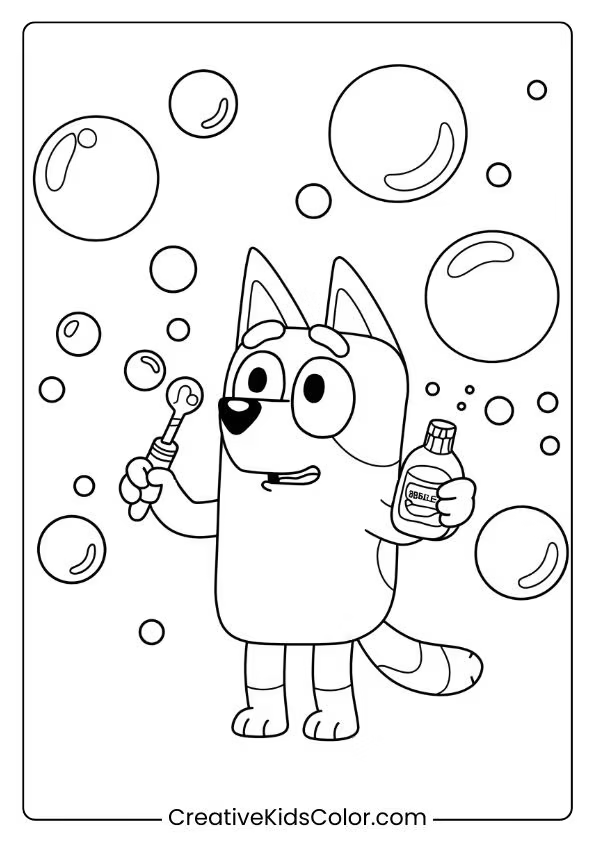
Bluey’s Bubble Blowing
Bluey blows bubbles with happiness on a bright sunny day.
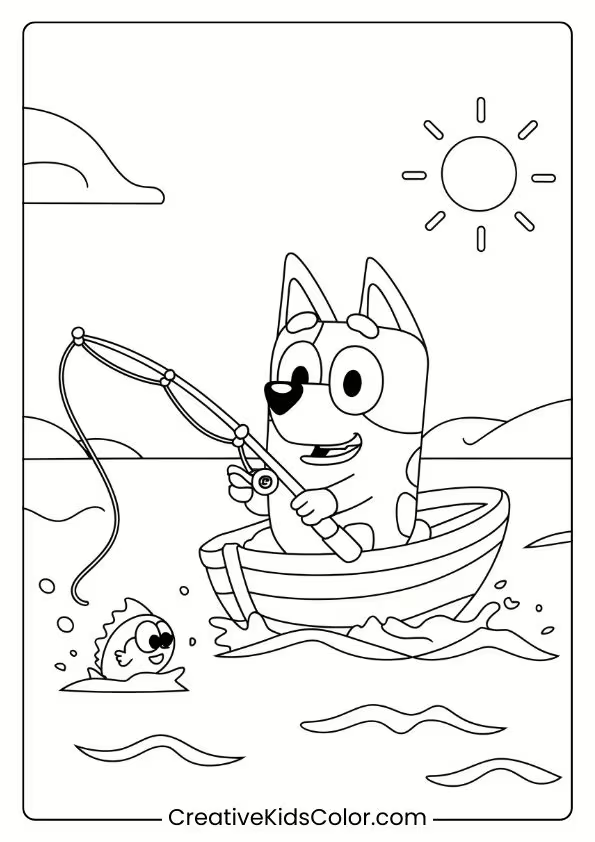
Bluey’s Fishing Trip
Bluey enjoys a relaxing day fishing on the boat as he looks around.
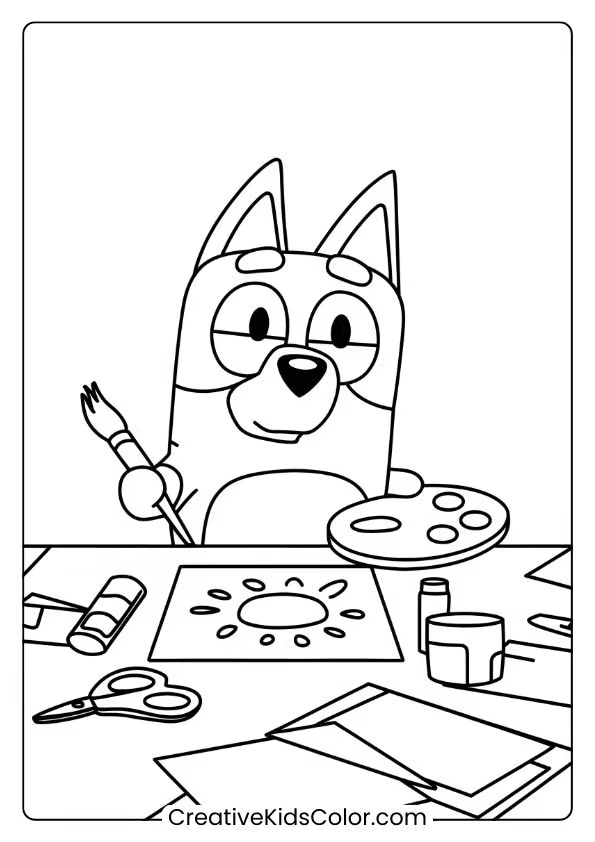
Bluey’s Art and Craft Day
Bluey gets creative with paints and other art materials.
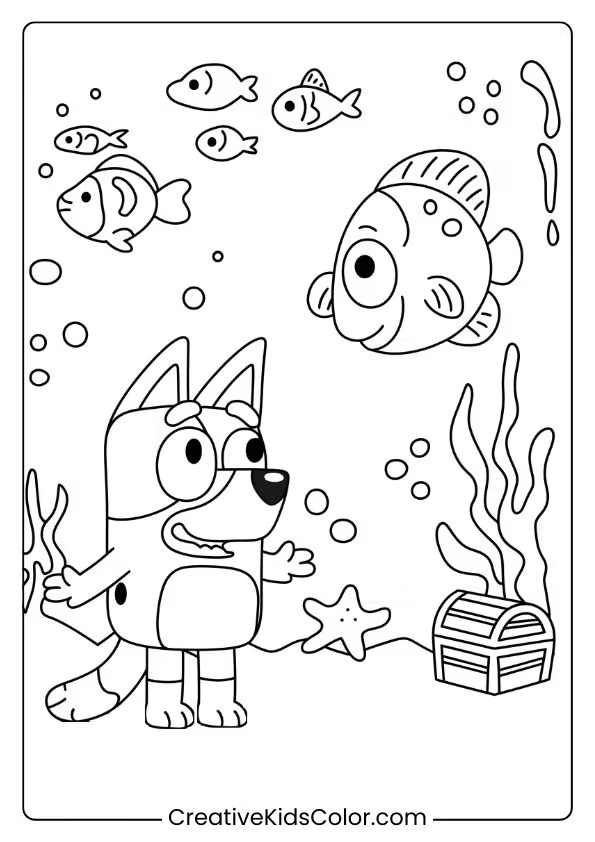
Bluey’s Fun Day at the Aquarium
Bluey has fun exploring the aquarium with fish all around him.
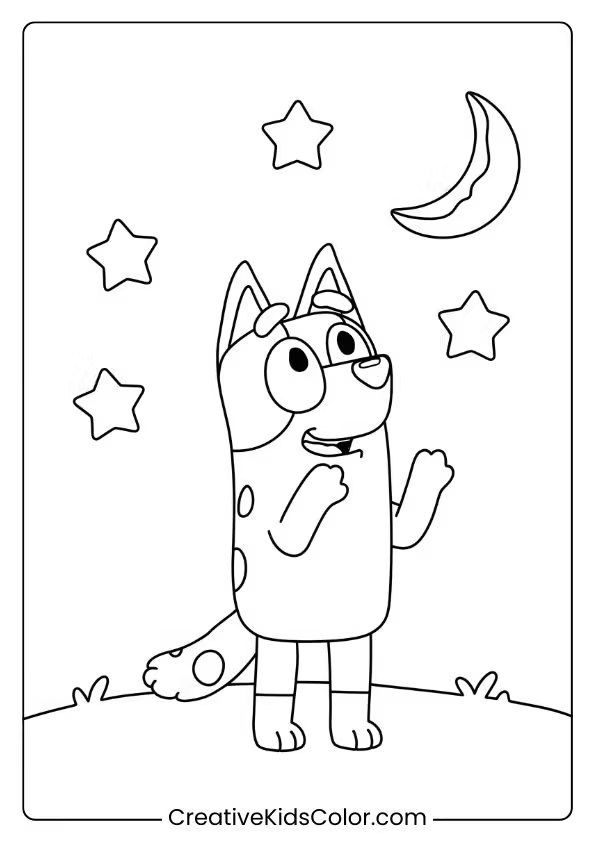
Bluey Under the Stars
Bluey looks up at the stars and the moon on a calm and clear night.
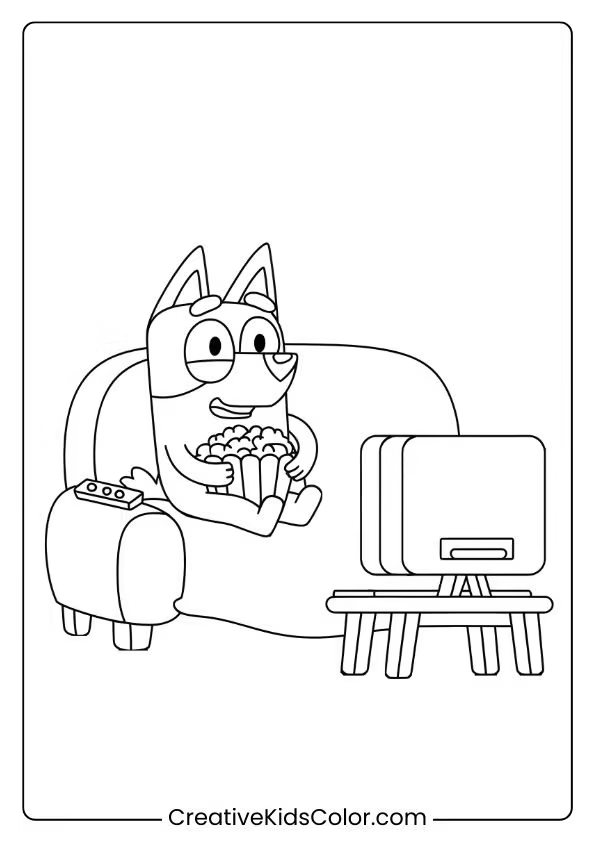
Bluey’s Cozy Movie Night
Bluey relaxes with a bag of popcorn as he watches a movie on the television.
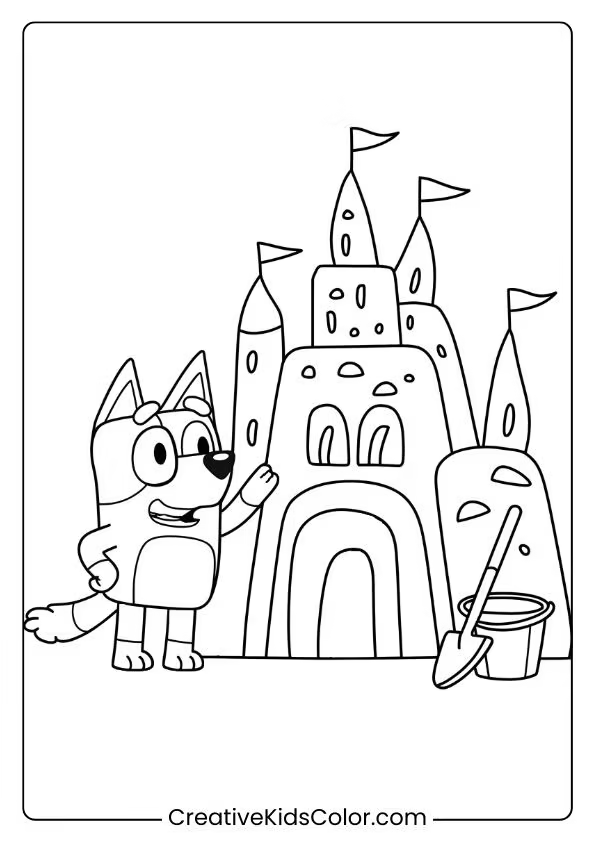
Bluey with Sandcastle
Bluey shows off his sandcastle proudly at the beach.
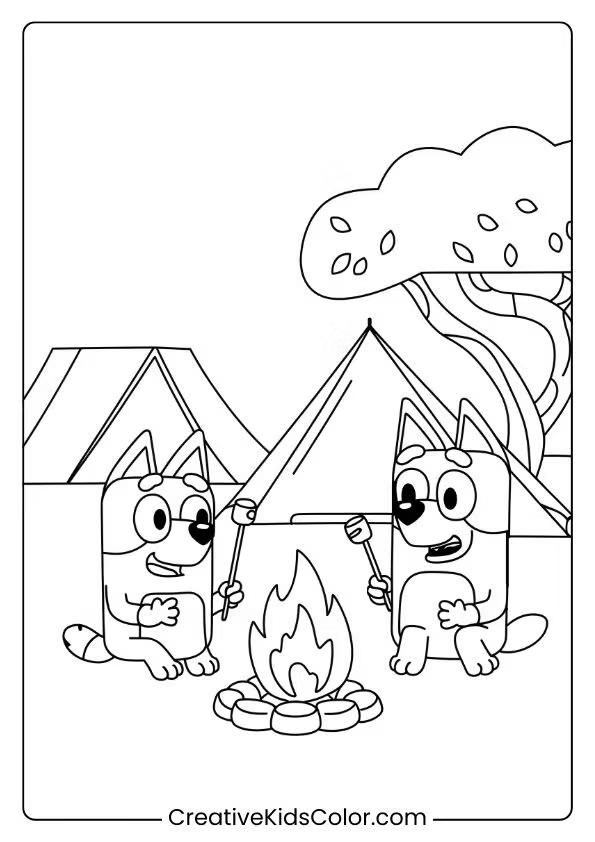
Bluey and Bingo’s Camping Trip in the Outback
Bluey and Bingo have a wonderful time at the camping site having marshmallows.
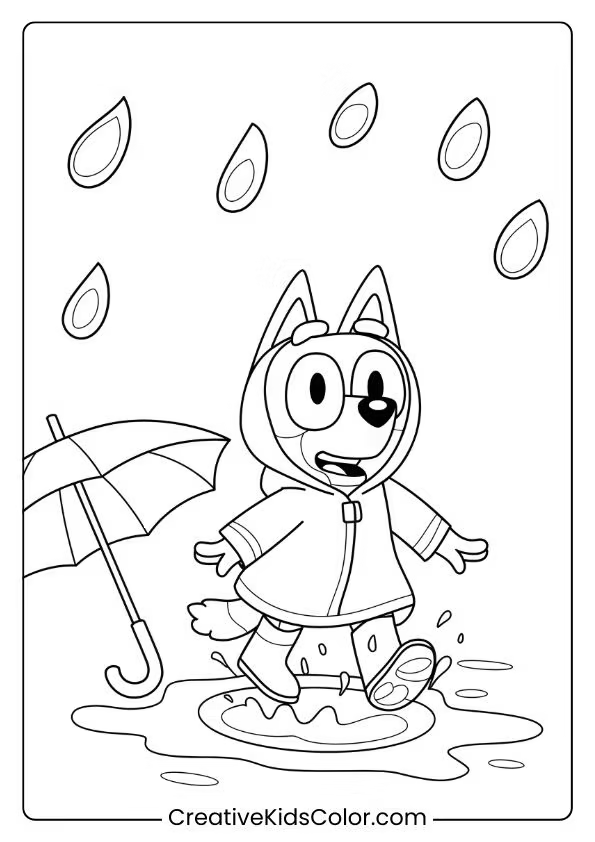
Bluey’s Rainy Day
Bluey splashes happily in the puddles on a rainy day.
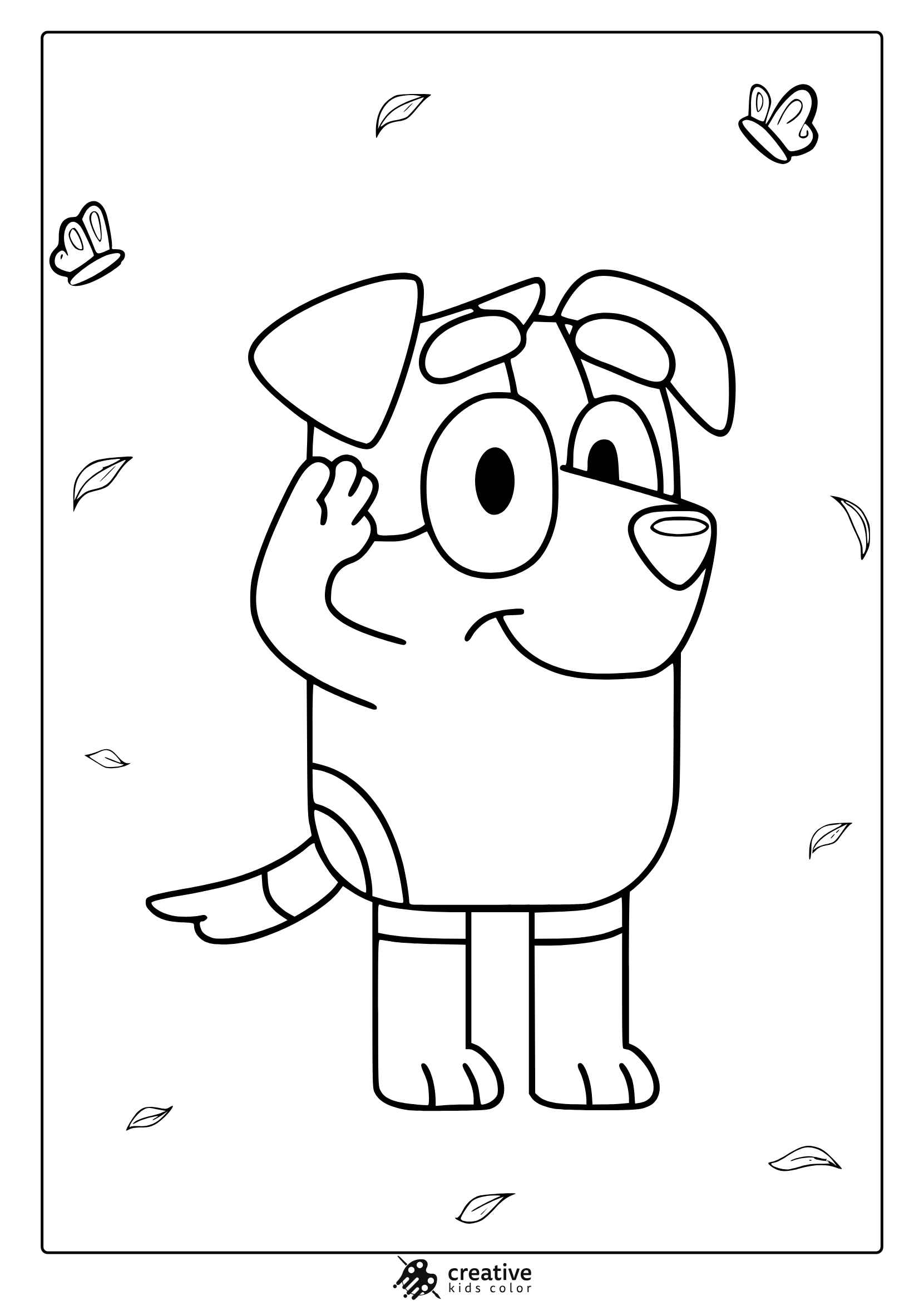
Jack From Bluey Coloring Page
Jack is waving at us! Now fill his colors with your favorite hues and shades.
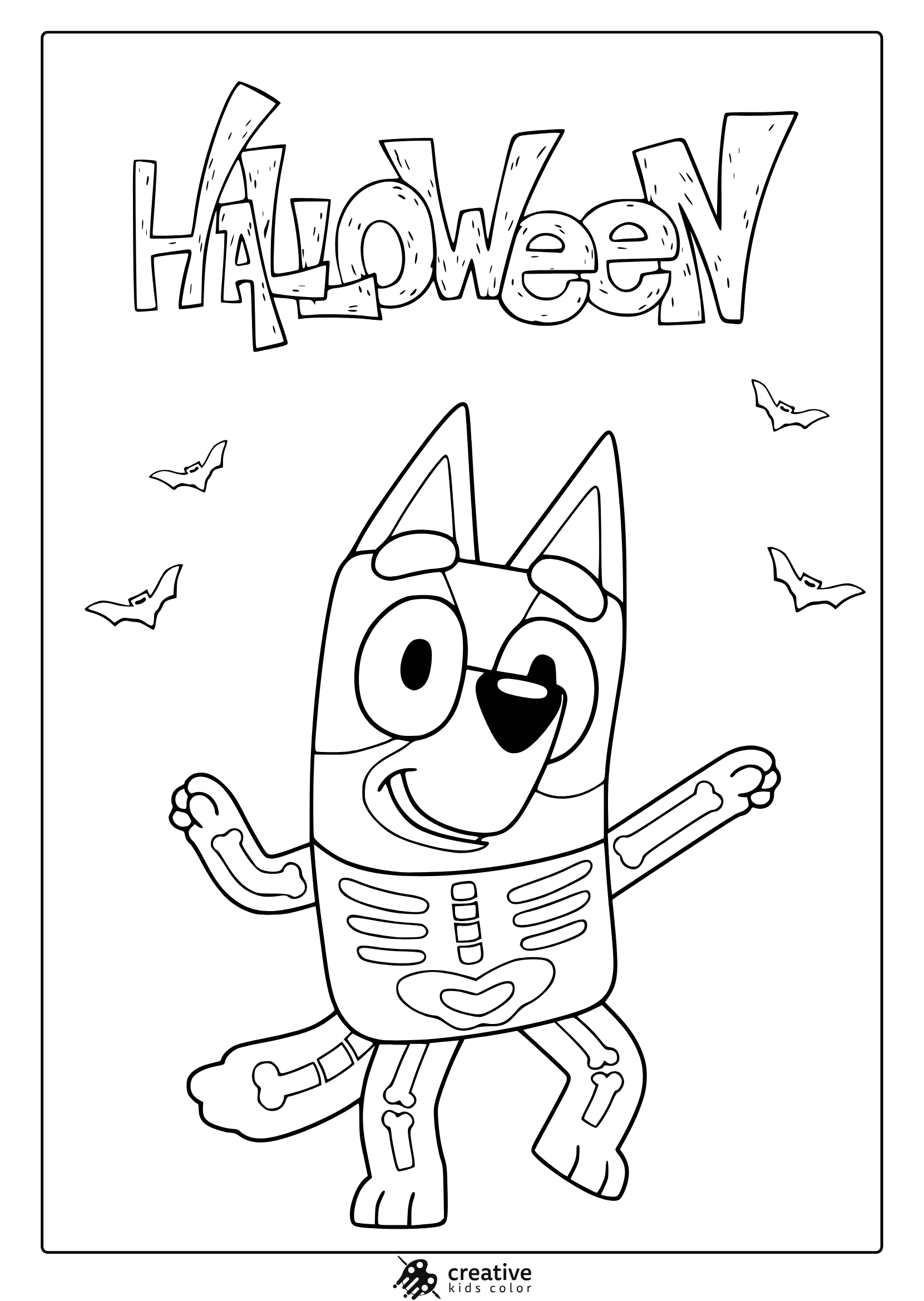
Bluey Halloween Coloring Page
Bluey prepares for a pooky Halloween night in this cute coloring page with bats and spooky lines.
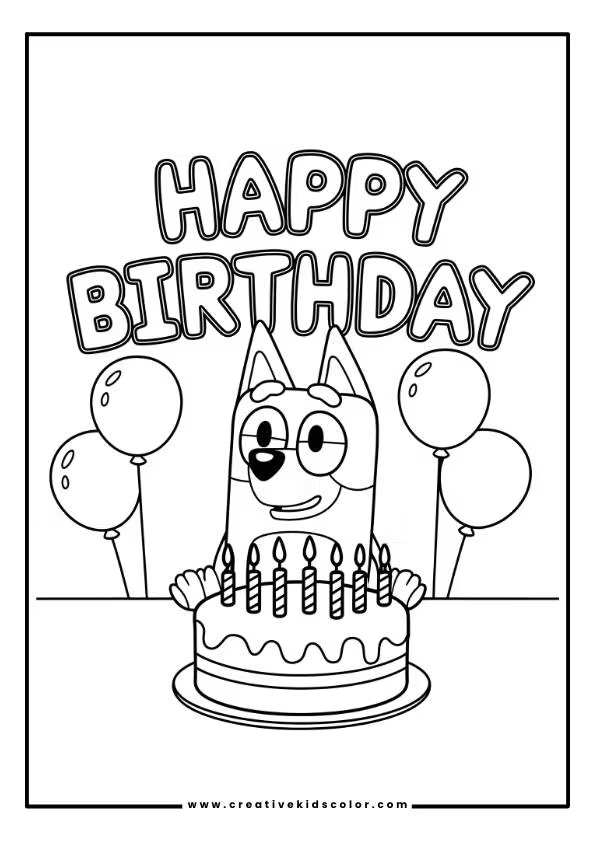
Bluey Birthday Coloring Pages
Bluey celebrates his birthday with a cake, balloons, and a big smile on his face.
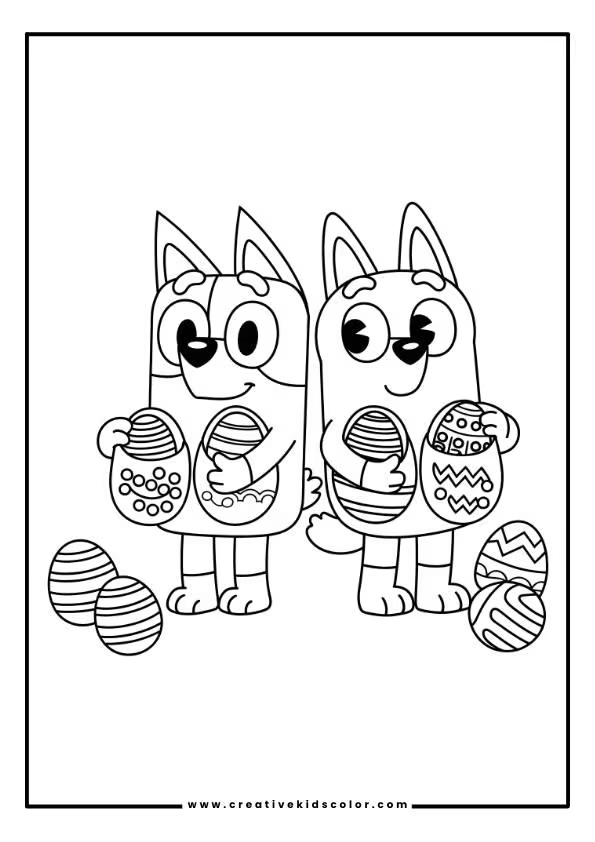
Bluey Easter Coloring Page
Bluey and Bingo hold on to colorful Easter eggs in this lovely Easter scene.
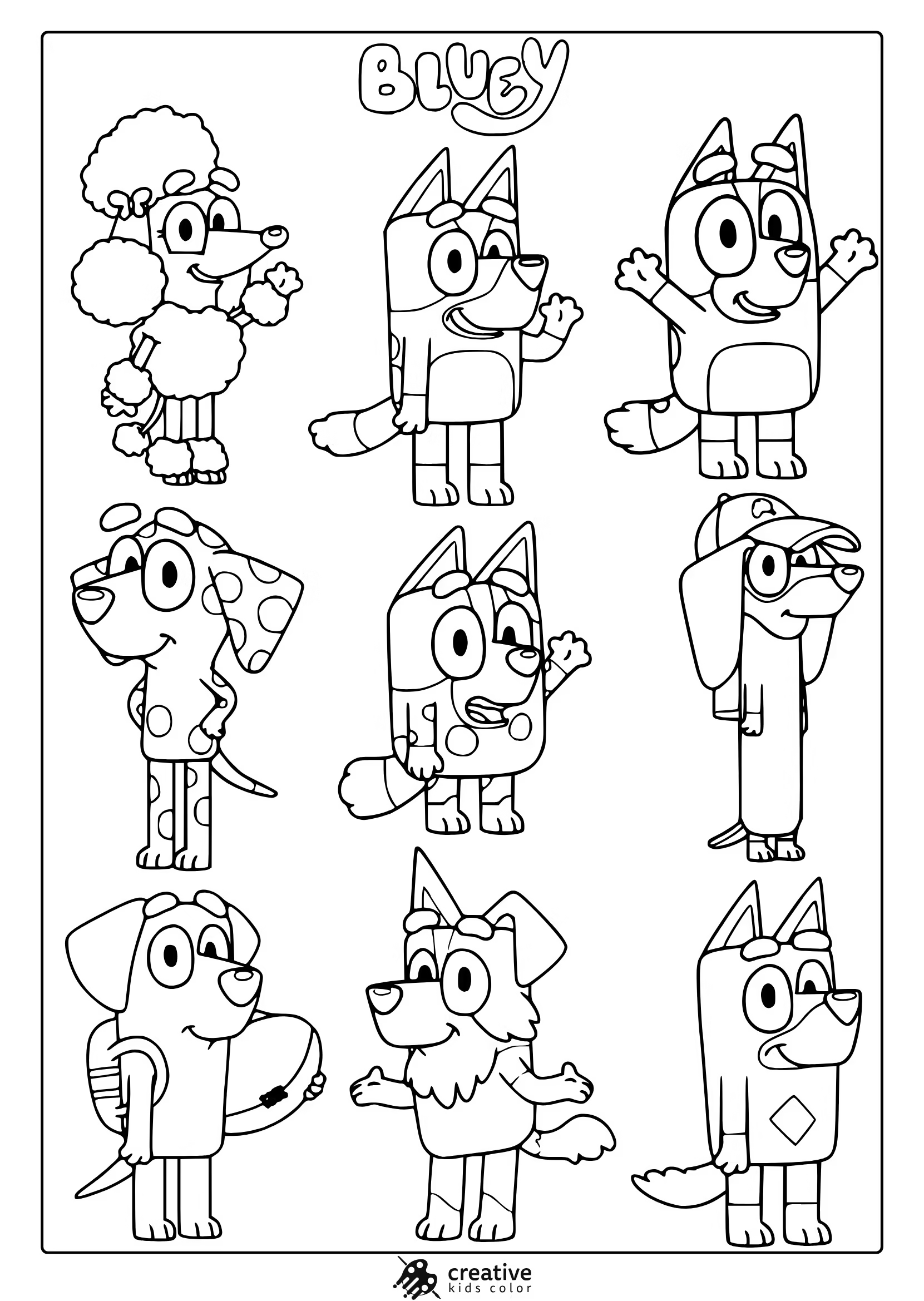
Bluey Characters Coloring Page
This grid contains all your favorite Bluey characters for you to color one by one.
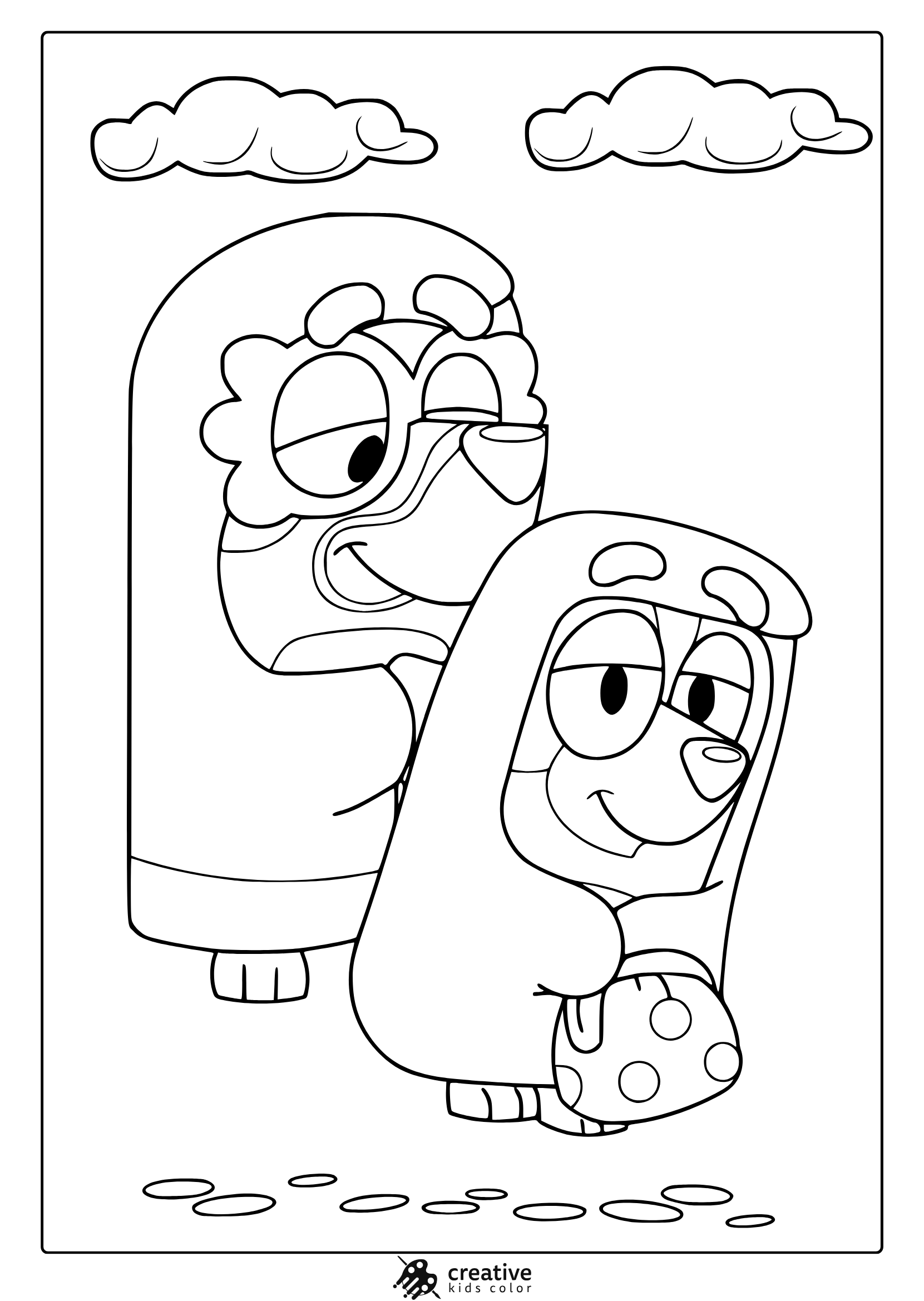
Bluey Grannies Coloring Page
The Grannies are back in town with their funny funny hats and smiles, all waiting for you to color them in!
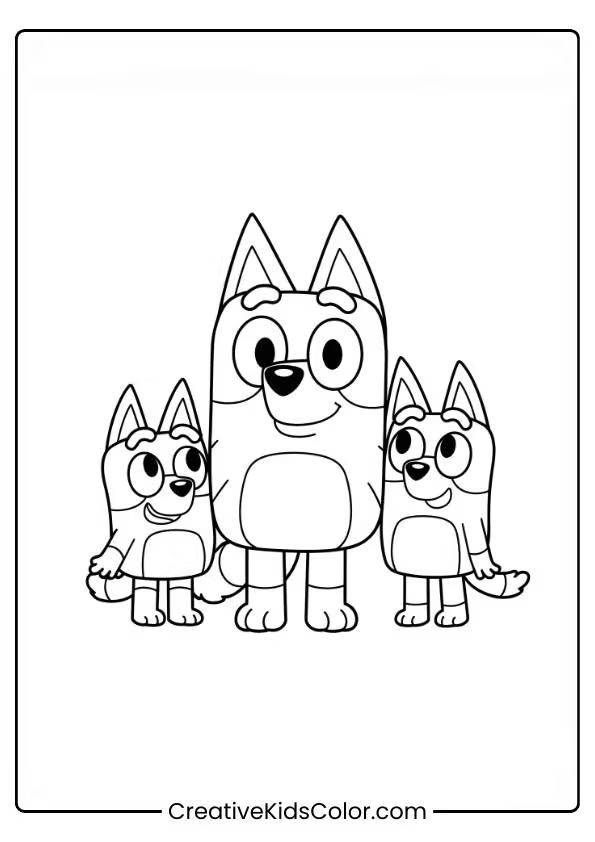
Bluey and Friends Coloring Page
Bluey and her friends have a lovely smile in this pretty scene.
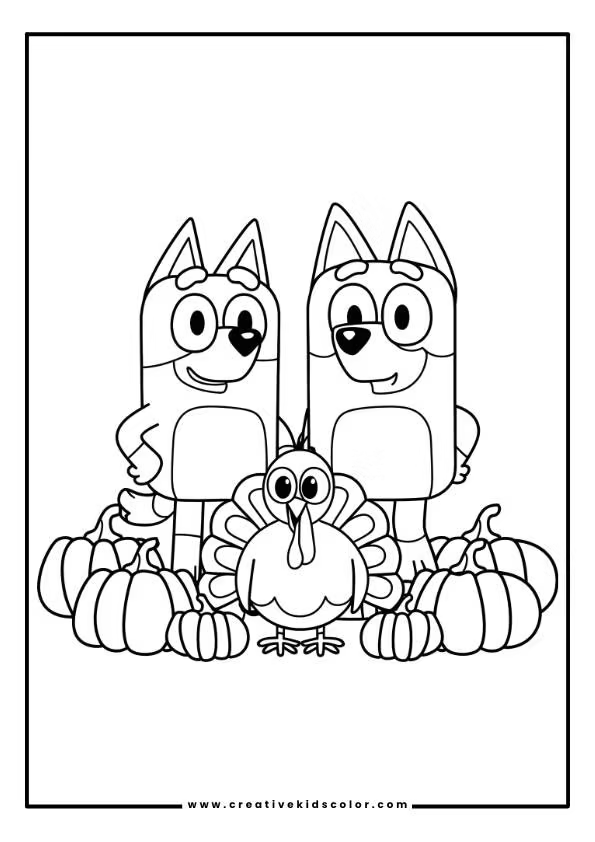
Bluey Thanksgiving Coloring Page
Bluey and Bingo stand with a turkey and pumpkins around them.
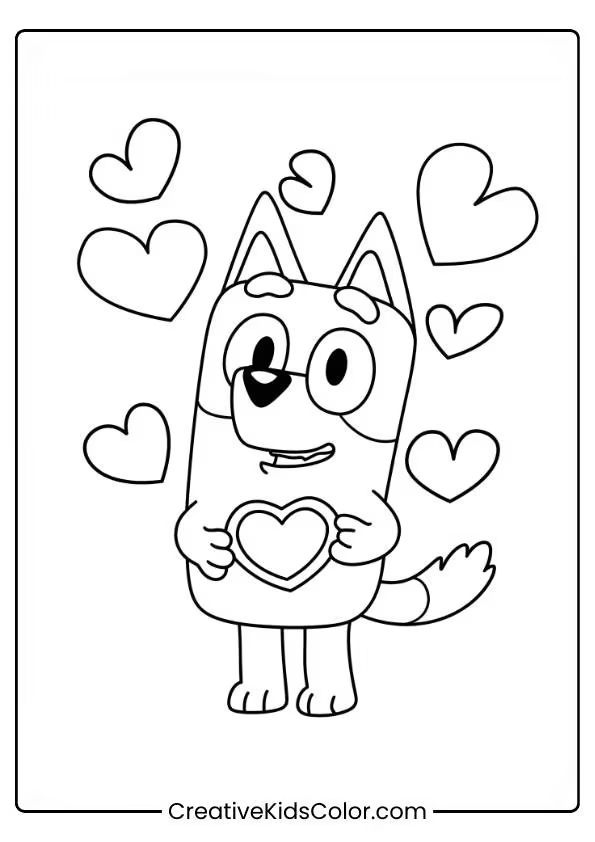
Bluey Valentines Coloring Page
Bluey and Bingo spend a lovely time together in a heart shaped frame.
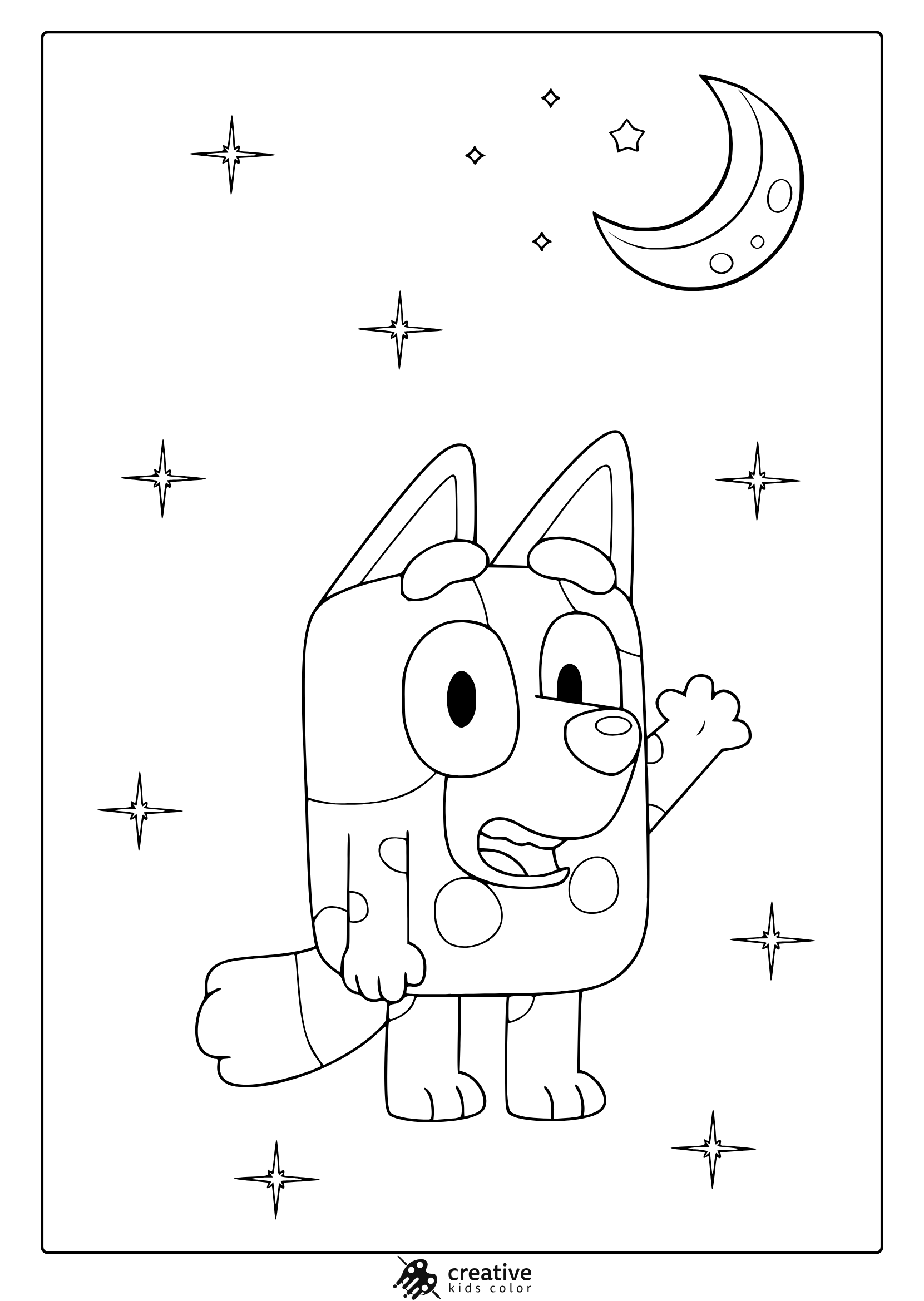
Muffin From Bluey Coloring Page
Muffin shines brightly under the night sky! Now add stars and moon with your crayons.
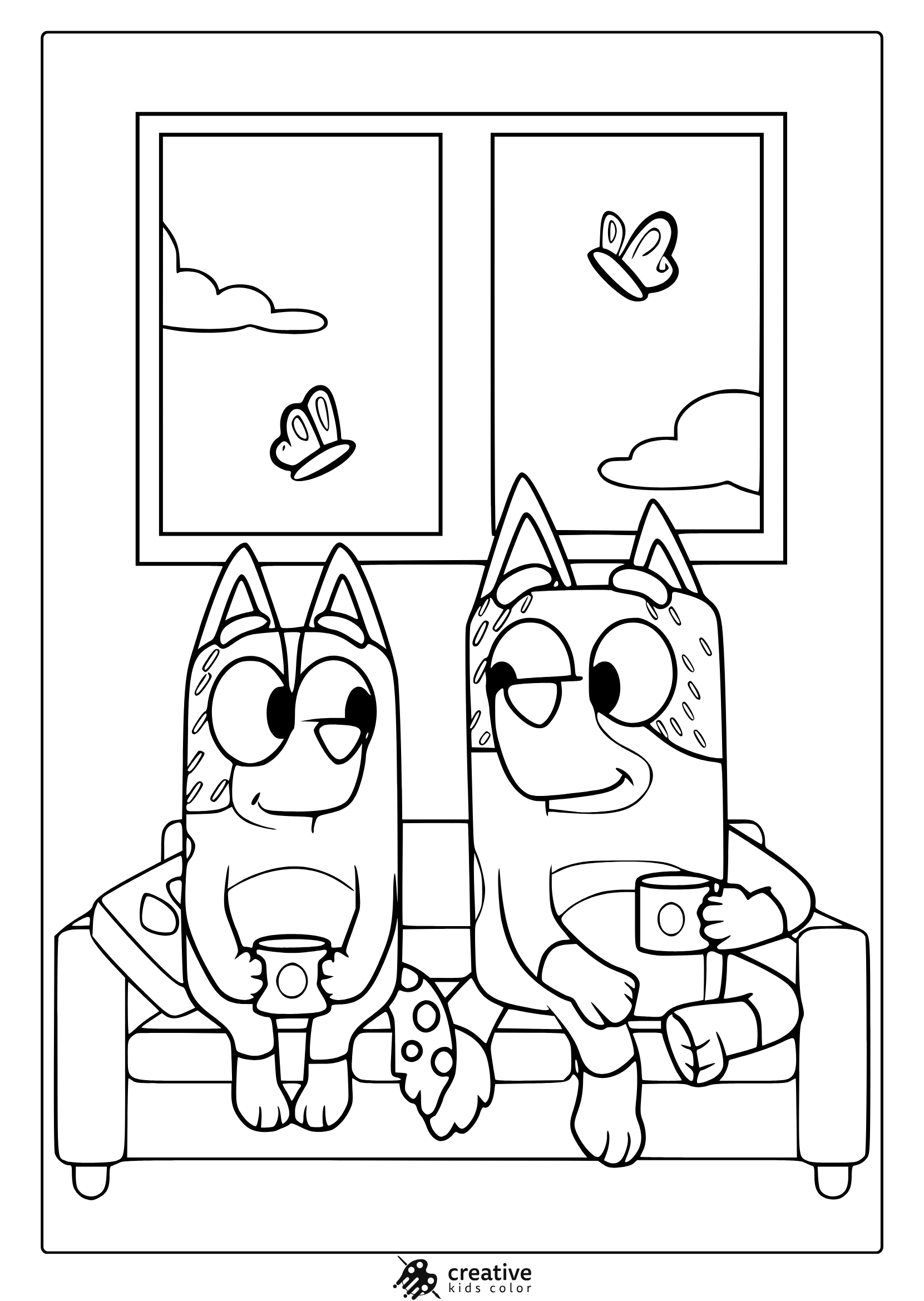
Bluey Dad Bandit And Mum Chilli Coloring Page
Bandit and Chilli spend a calm and lovely time together. Now add your colors to bring them in life!
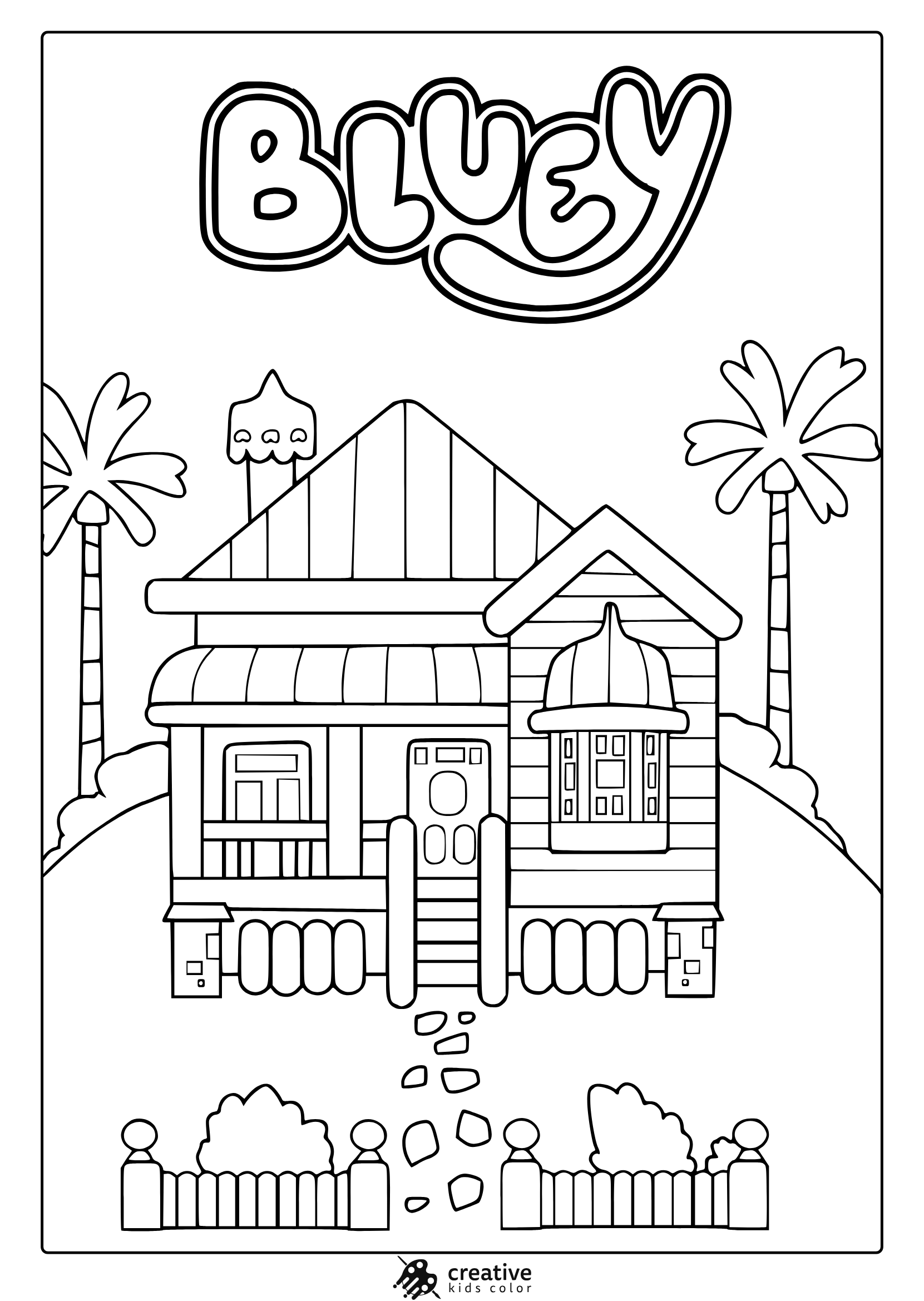
Bluey House Coloring Page
Now bring Bluey’s lovely home to life with your favorite colors!
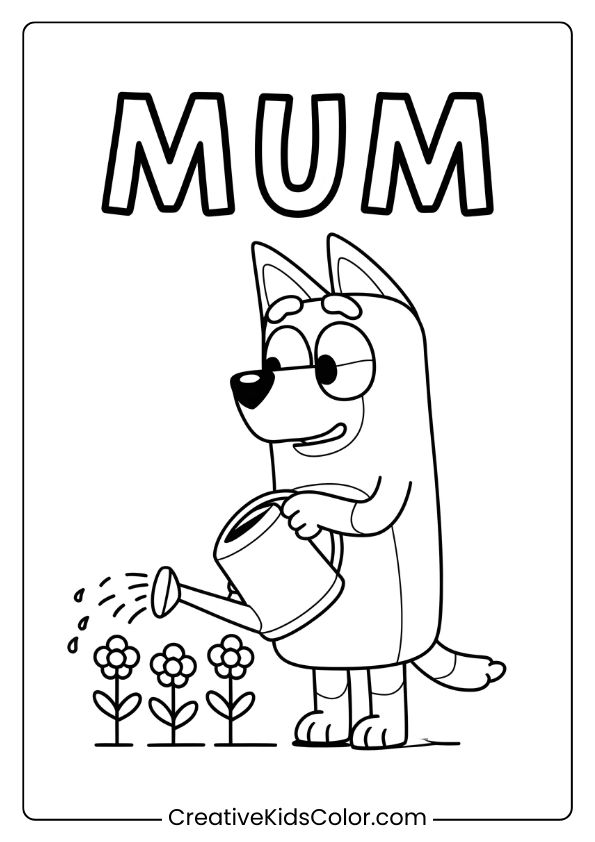
Bluey Mum Coloring Pages
Bluey and her mother have a lovely time holding hands.
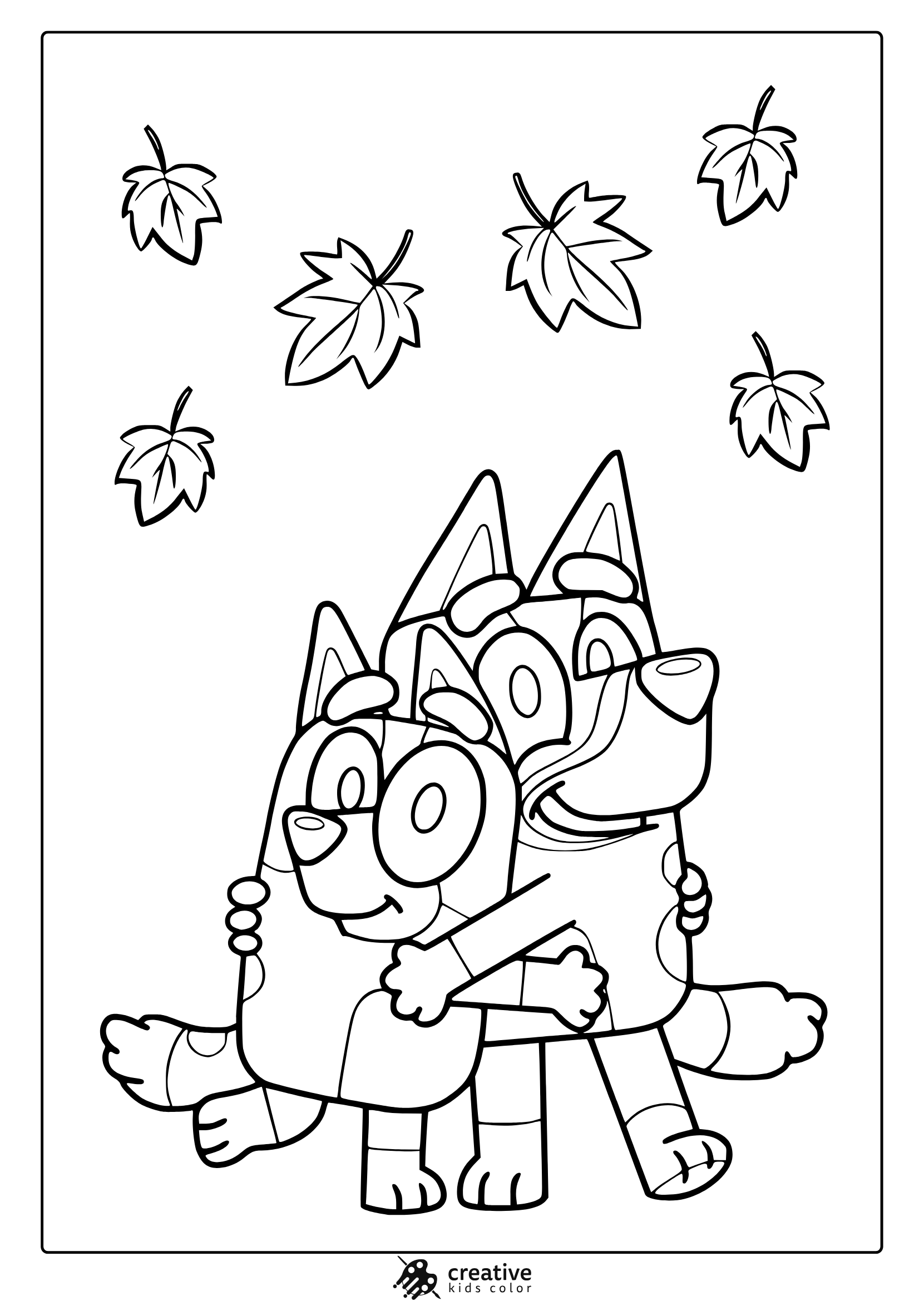
Bluey Fall Coloring Page
Bluey and a friend share a lovely hug under the falling leaves on a lovely autumn day.
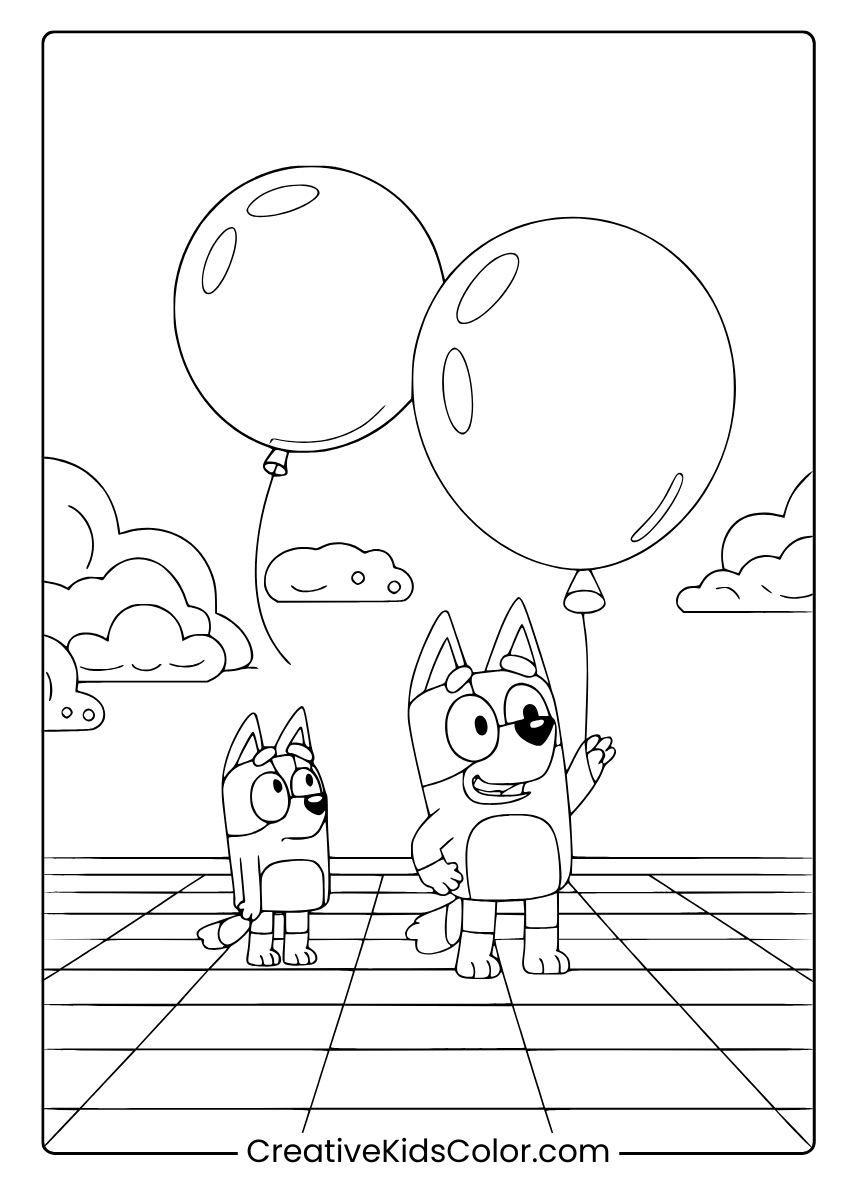
Bluey and Bingo Coloring Page
Bluey and Bingo enjoy a bright sunny day with balloons and tile floor in this lovely scenery.
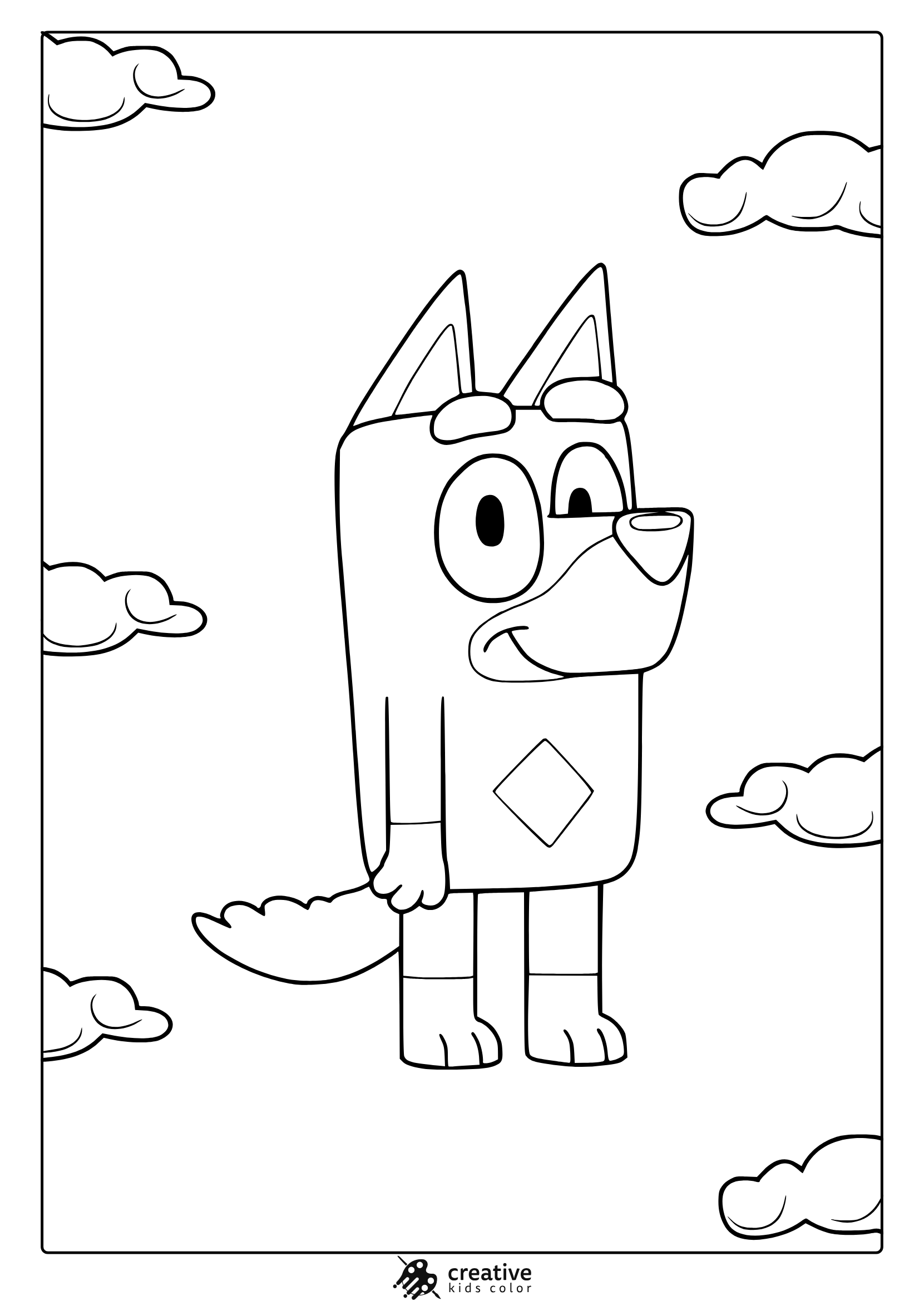
Rusty From Bluey Coloring Page
Rusty stands tall under the clouds and is waiting for you to bring color to his world!

Bluey Waving in the Park Coloring Page
Bluey smiling and waving in this lovely park scene.
The games do not have to stop at the last coloring page! We will be adding more Bluey coloring pages to this collection, so make sure to come back and see what the Heeler family gets up to next! Do you want a game, character, or family member to be featured in our next Bluey coloring pages? Let us know in the comments below, and make sure to share this post with another Bluey fan who would enjoy spending time coloring with the Heeler family!