Cursive Letter Q Worksheets
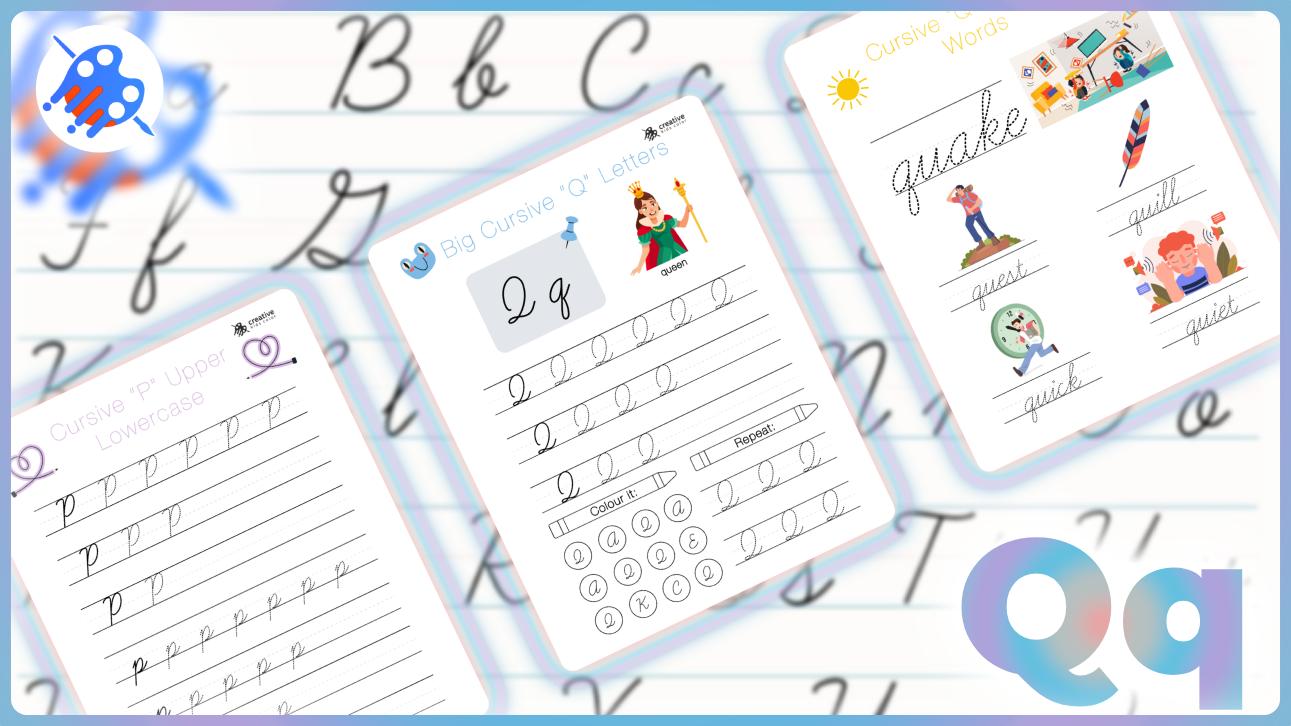
These cursive letter Q worksheets are a great way to practice forming capital Q, lowercase q, plus five letter words that start with the letter Q. On this page you will find tracing worksheets and cursive practice sheets for kids to use at home or in the classroom.
Cursive letter Q is a useful letter to practice because it has a nice round shape plus a tail.
The lowercase q is a bit of a challenge due to the round part of the lowercase q and the tail that goes below the writing line.
You have to make sure that the tail on the lowercase q doesn’t trail too far below the writing line.
To download any of these worksheets simply click on the image or the PDF icon below the image. Each of these printable pages is available as a free printable PDF in US Letter size and should print nicely on A4 size paper by default.
Big Cursive Q Letters
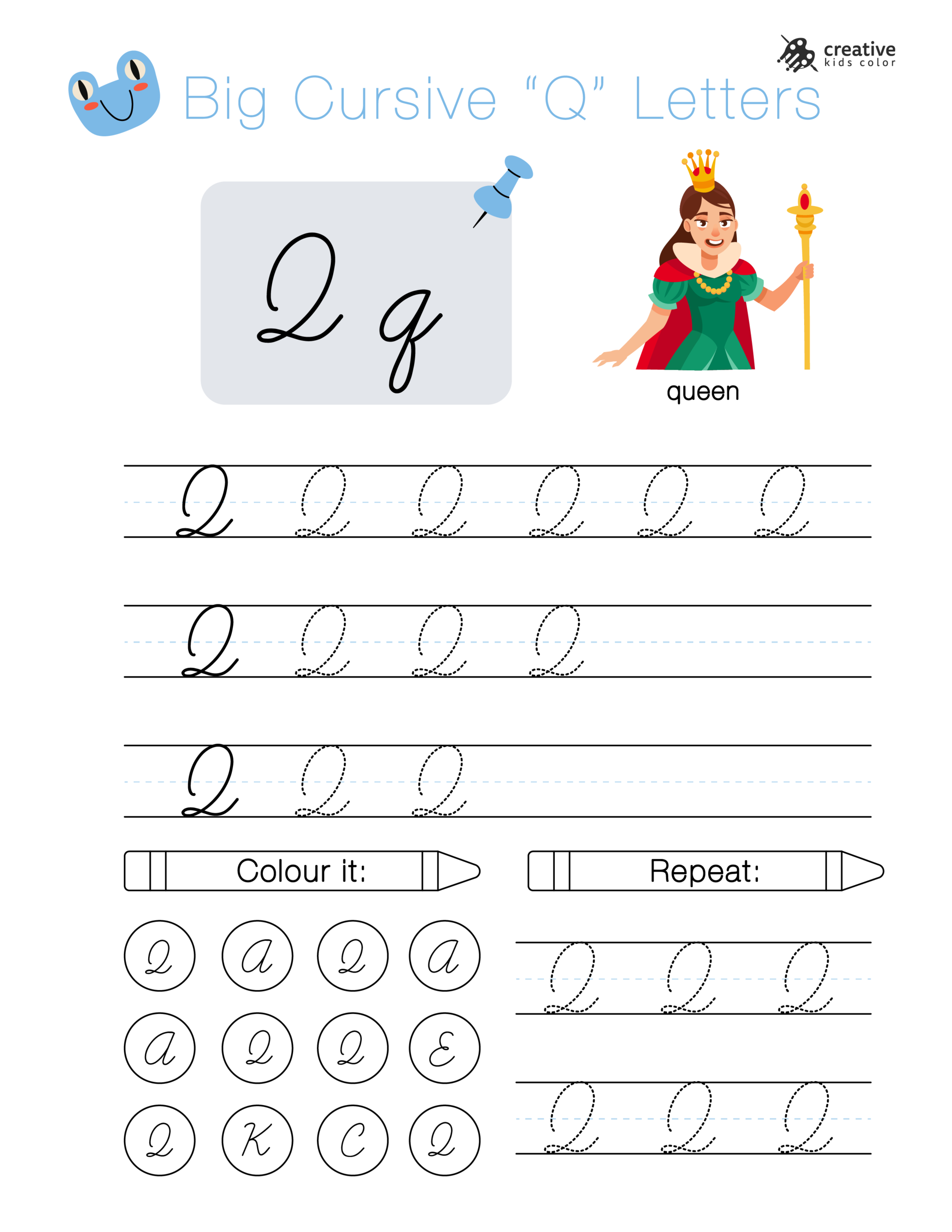
This cursive letter Q worksheet provides extra space for kids to trace and practice the full letter shape.
Capital Q should have a nice round shape with the tail at the bottom of the letter to finish off the formation of the letter.
The larger space provided in this worksheet is beneficial since you need the space to practice the full round shape and tail of the cursive letter Q.
If the tail of the letter Q is too short it doesn’t really look correct, but if the tail of the letter Q is too long it can get in the way of the next letter when forming words in cursive.
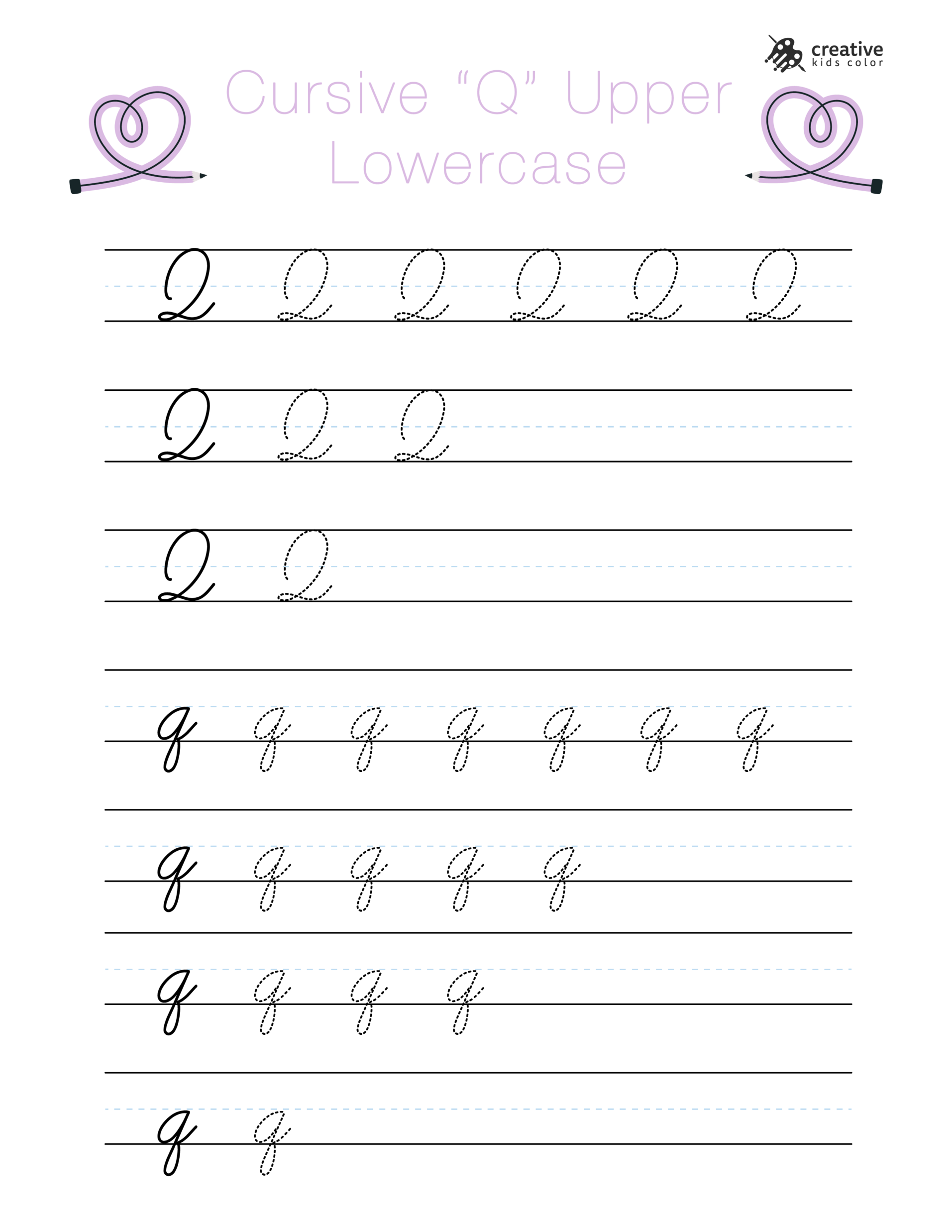
Cursive Q Upper & Lowercase
This worksheet puts the uppercase Q and lowercase q together so that kids can practice the differences in the letter size, shape and position on the writing line.
The uppercase Q is larger and more rounded compared to the lowercase q.
The lowercase q has a similar formation to the letter a but with the tail going below the writing line.
The tail of the lowercase q should be controlled so that it doesn’t trail for a long distance below the writing line before coming back up to the next letter.
This page is good for kids learning how to write the lowercase q as it needs space above and below the writing line.
Cursive Q 5 Letter Words
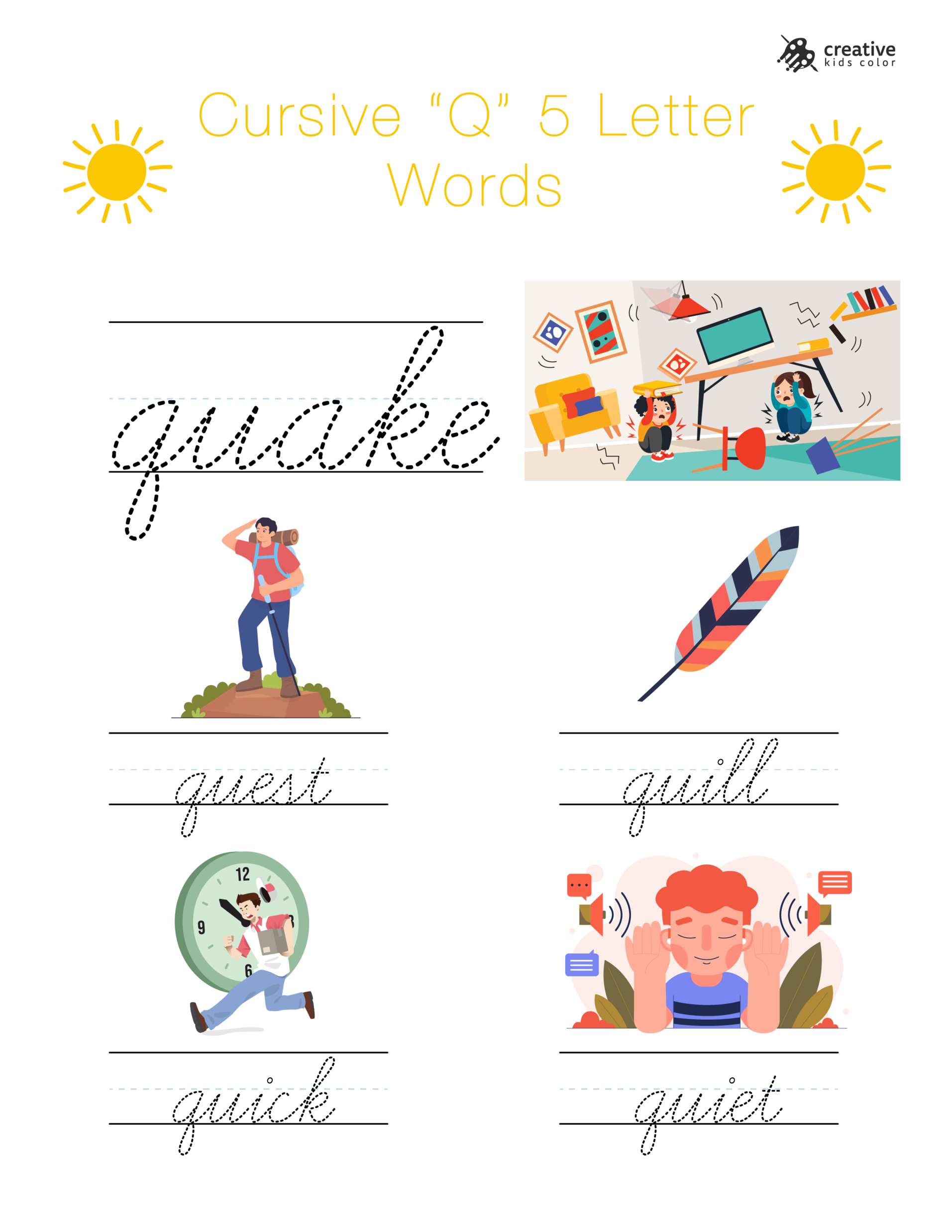
This worksheet is a great way to practice the letter q within five letter words such as queen, quick and quiet.
The best thing about this worksheet is that the five letter words each have the letter Q followed by the letter U. The letter combination qu is common in the English language and the letter u is often found after the letter Q.
For example, in the five letter word queen the q leads into the letter u and continues with two e letters and n.
In the five letter word quick the letter q leads into the u which leads into the letters i, c and the final letter k.
The letter combination qu also appears in the five letter word quiet but with the letters i, e, t following the qu.
Working with five letter words provides more of a challenge for kids learning cursive as they need to make sure the tail of the q, the joining of the letters qu and the position of the following letters all fit within the space provided.
Why Q Is Often Followed by U
The letter Q is an interesting letter to practice since it is often followed by the letter U. That makes the letter Q quite unique compared to other letters in the English language.
The letter combination qu is common in many English words like queen, quick and quiet.
Kids are not only practicing the formation of the letter Q but also learning the association of the letter combination qu within words.
This is even more important within cursive writing since the tail of the letter q can interfere with the letter u if it is not controlled.
If you enjoyed these letter Q worksheets for kids please let us know your thoughts in the comments section below.
We also appreciate you sharing this page with another parent, teacher or student.